What You Pay
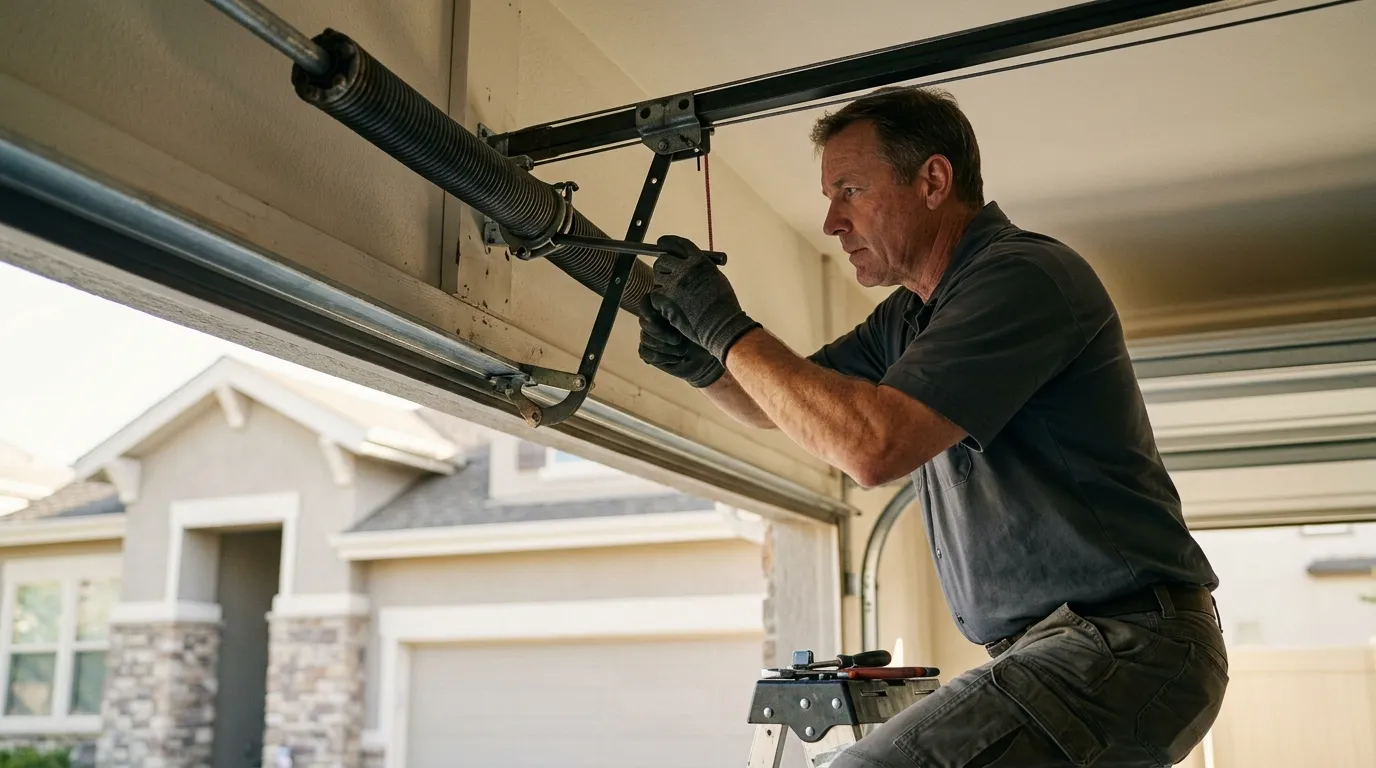
What a maintenance visit costs depends on the door - a sixteen-foot double with an aging opener takes more time than a single steel door with a newer unit - so we're not going to put a flat number here that doesn't hold up once we're actually looking at your hardware. What we can tell you is what drives the cost up or down: the number of springs, whether the rollers are steel or nylon, how much rust has to be cleaned off before anything can be adjusted, and whether the opener's drive belt or chain needs tension work.
One honest limitation: if a spring is already stretched past safe tension or a cable is fraying, maintenance turns into a repair quote on the spot. We won't lubricate a spring that's about to let go just to finish the visit clean - that's not a service, that's a liability. In a household earning the area's median of $92,639, a yearly tune-up is usually the cheaper long-term choice next to an emergency spring replacement or a full opener swap, but we'll never tell you to spend money on parts that are still fine.
Why This Fails Locally
Strongsville's housing stock runs from 1938 up through 2002, with the typical home dating to around 1967 - squarely in the wave of construction that used torsion springs, steel track, and hardware that was built to a 1960s and 70s standard, not a modern one. Across this part of the region, that same build era shows up again and again: doors, openers, and springs original to houses that are now well past fifty years old.
Add a cold climate rated severe on top of that, and you get a specific failure pattern. Steel cable and spring coils contract in hard freezes, which pulls grease thin and lets moisture sit in the pitting that forms on unprotected metal. A spring that would run another five years in a mild climate can crack a coil here after one bad February. Nylon rollers get brittle. Weatherstripping that's already thinning from age shrinks further and stops sealing, which lets cold air and road salt spray reach hardware that was never built to handle either.
This isn't a Strongsville-specific defect - it's what happens when 1960s-era hardware meets a winter that actually gets cold. Maintenance exists to catch the wear before the cold finishes the job.