
Can You Do This Yourself
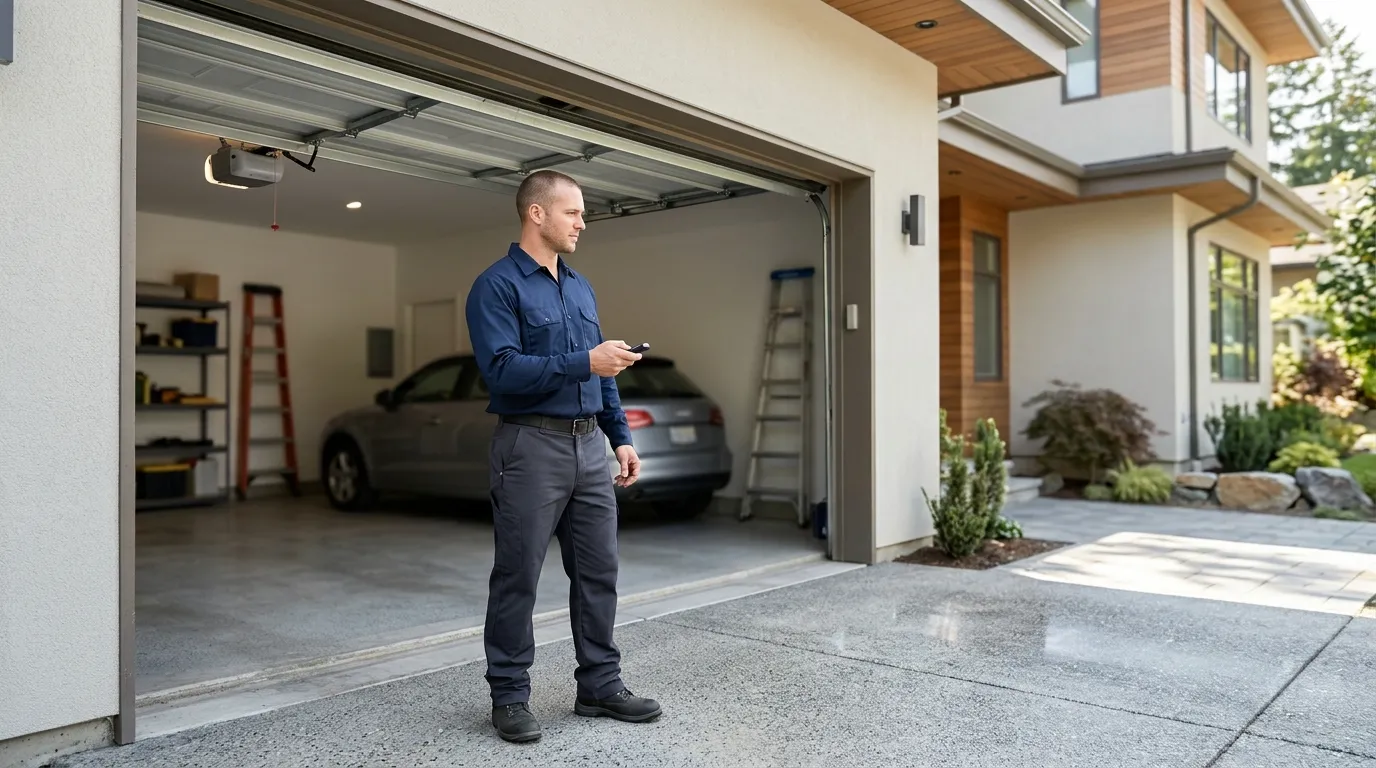
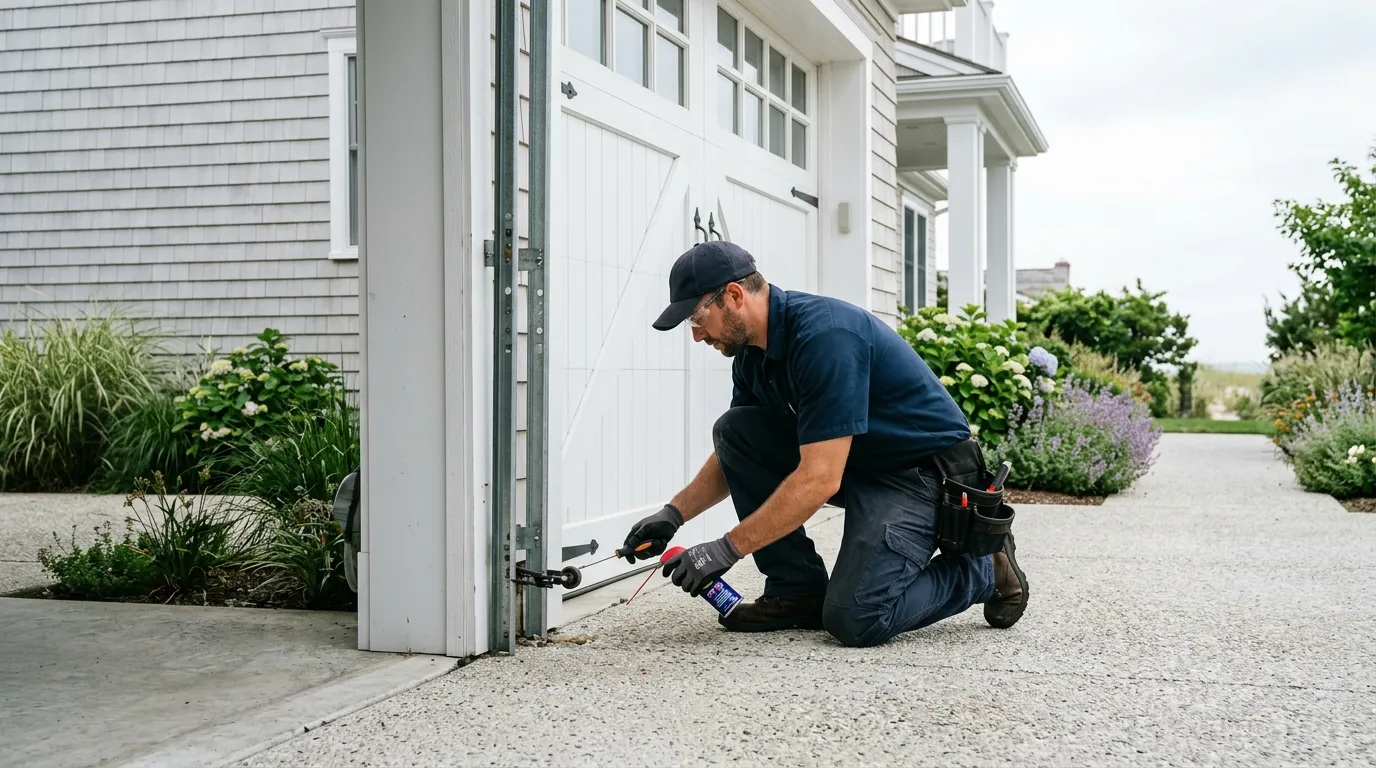
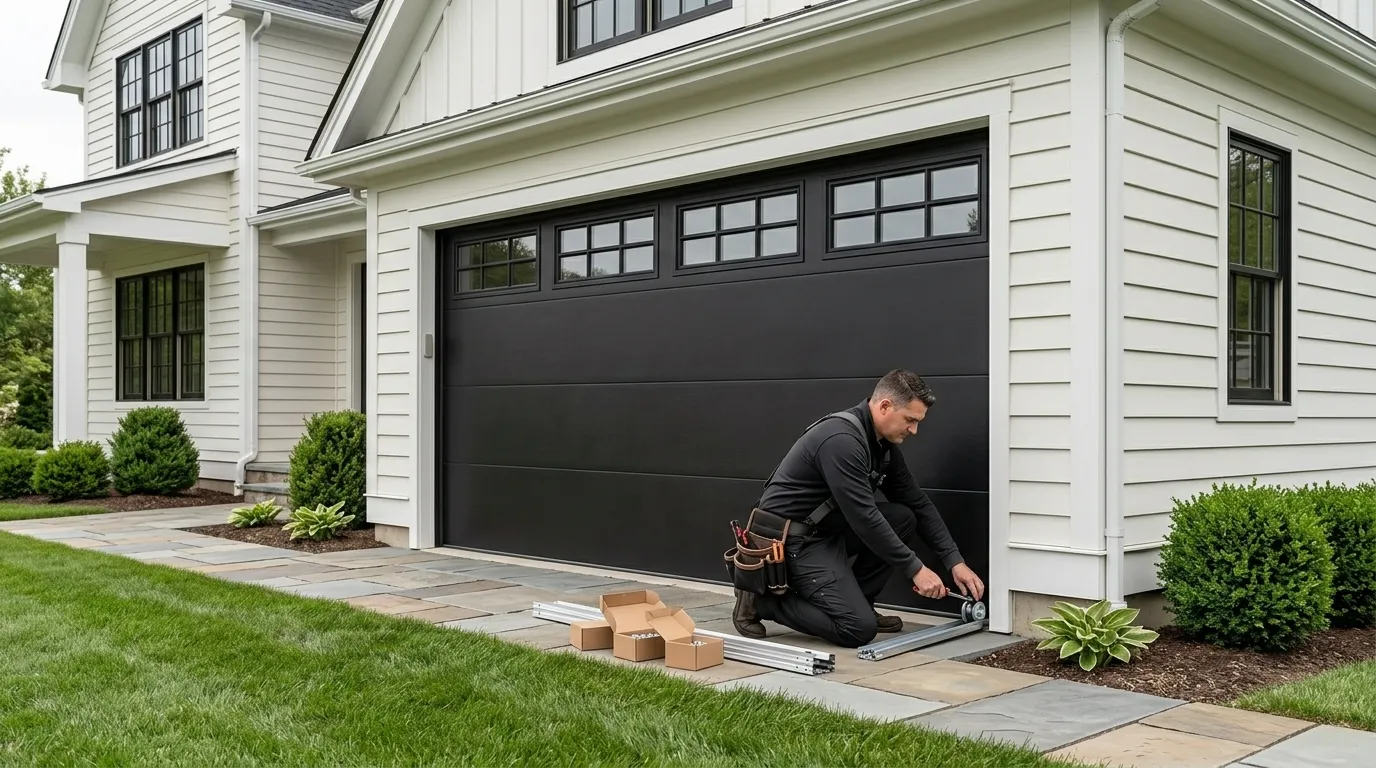
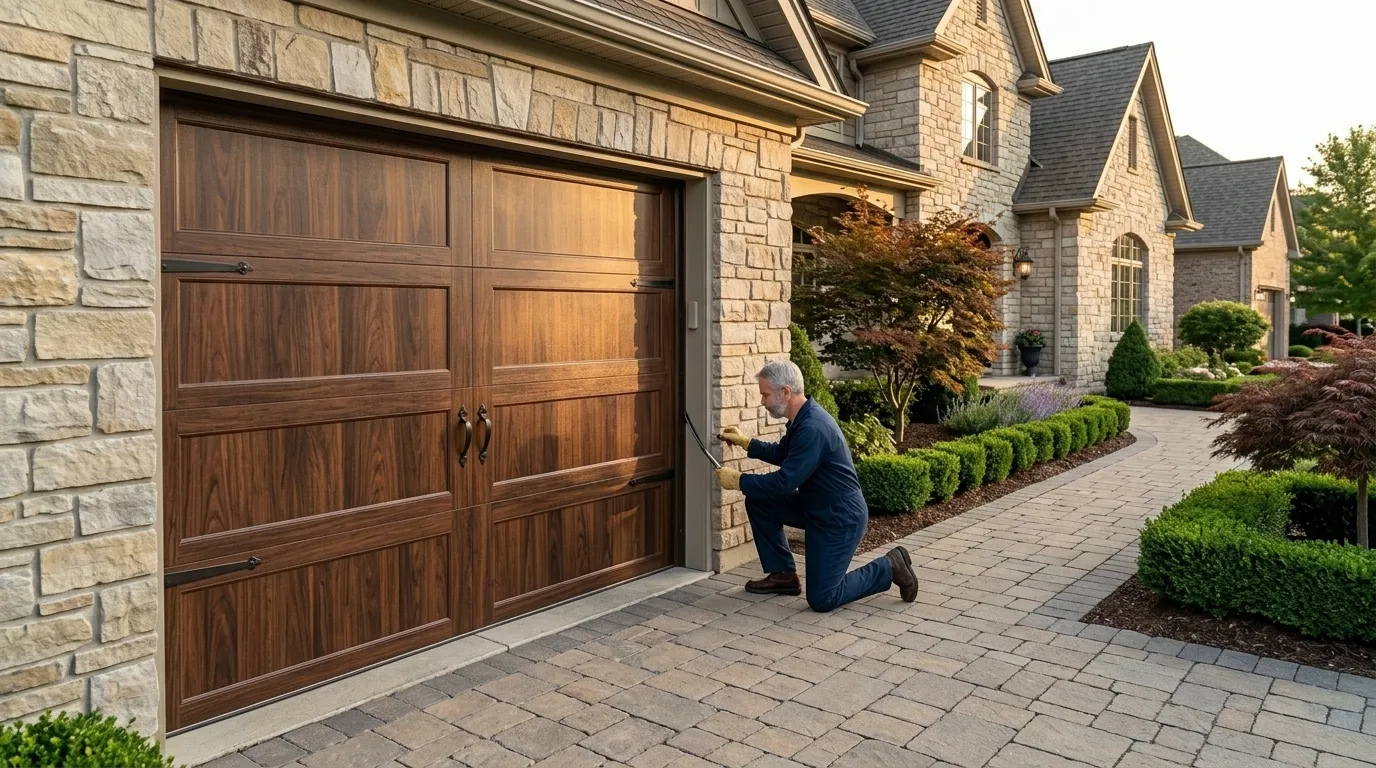
Some of it, yes. If the door won't close and the safety eyes are just dirty or knocked out of alignment, that's a wipe-down and a nudge, not a service call. Loose bolts on the track, a opener remote that needs a battery - fix those yourself and save the trip charge.
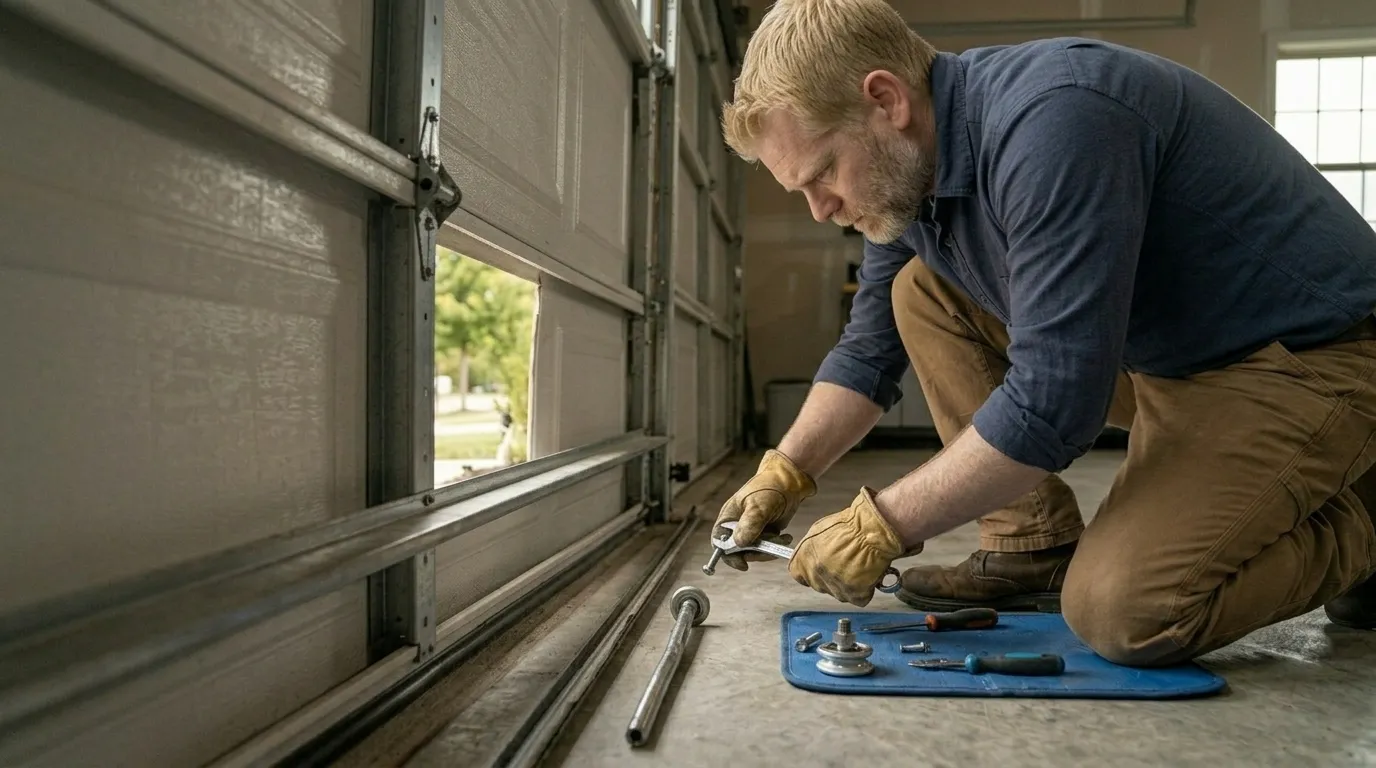
What you should not touch is the torsion spring. On a standard double door built in the 1980-ish range common to Olmsted Falls, that spring is wound under several hundred pounds of tension, and the winding bars and clamps needed to release it safely aren't something worth buying for a once-in-a-decade job. We've heard the stories about the C-clamp and the socket wrench, and they end at the ER, not in the garage.
The honest limit here: if your door is original to a 1980s build and the torsion spring has never been replaced, we're probably not going to "repair" it - we're going to replace the spring and check the cable and drum while we're in there, because forty-plus years on the same spring means the rest of the hardware is due too. That's not upselling, that's just what a spring that old is sitting next to.
What the Repair Takes
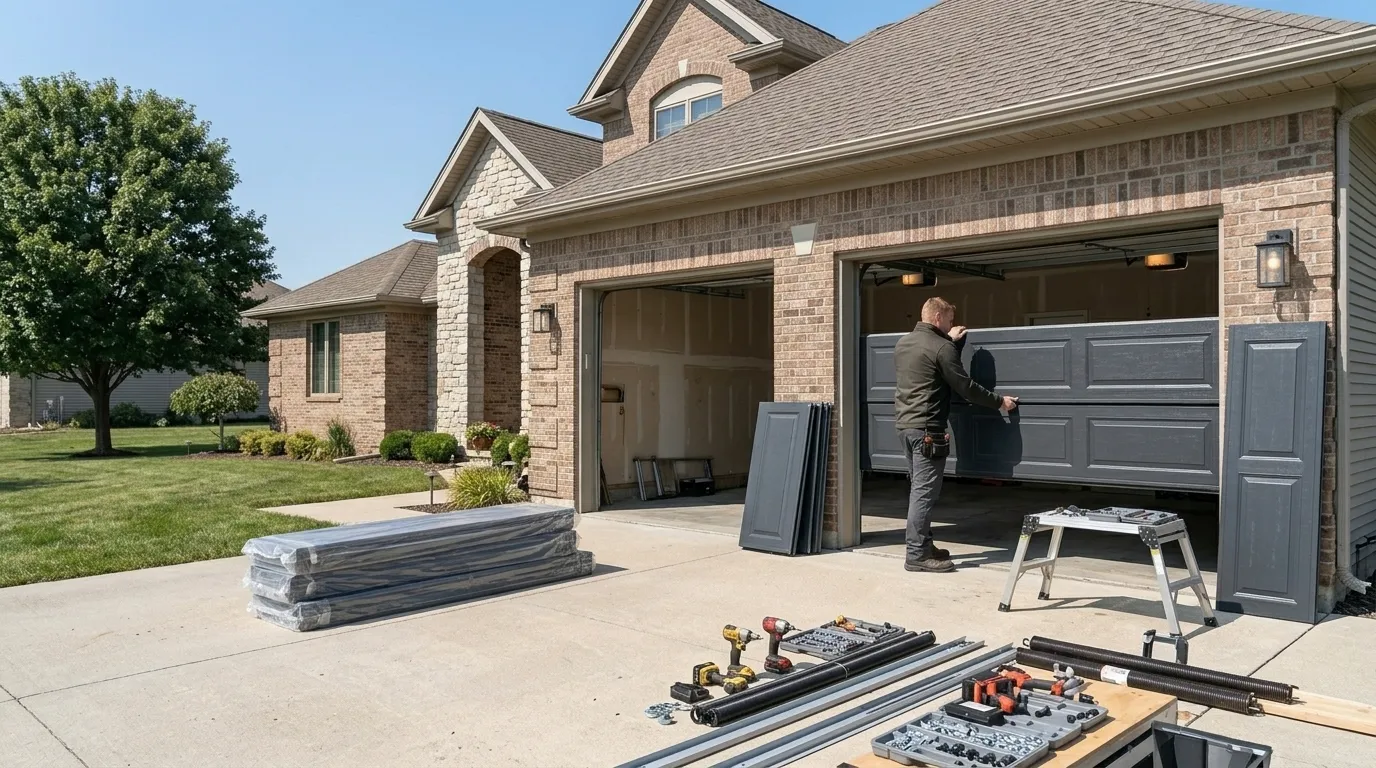
A house built around 1980 in Olmsted Falls typically shipped with a steel sectional door, torsion or extension springs depending on the builder, and a chain-drive opener if one was added at all - plenty of these went in without power openers and got one bolted on later. That mix is what we're diagnosing against: the torsion spring conversion parts on a door that started with extension springs, or an opener bracket that was never quite rated for the door it's lifting.
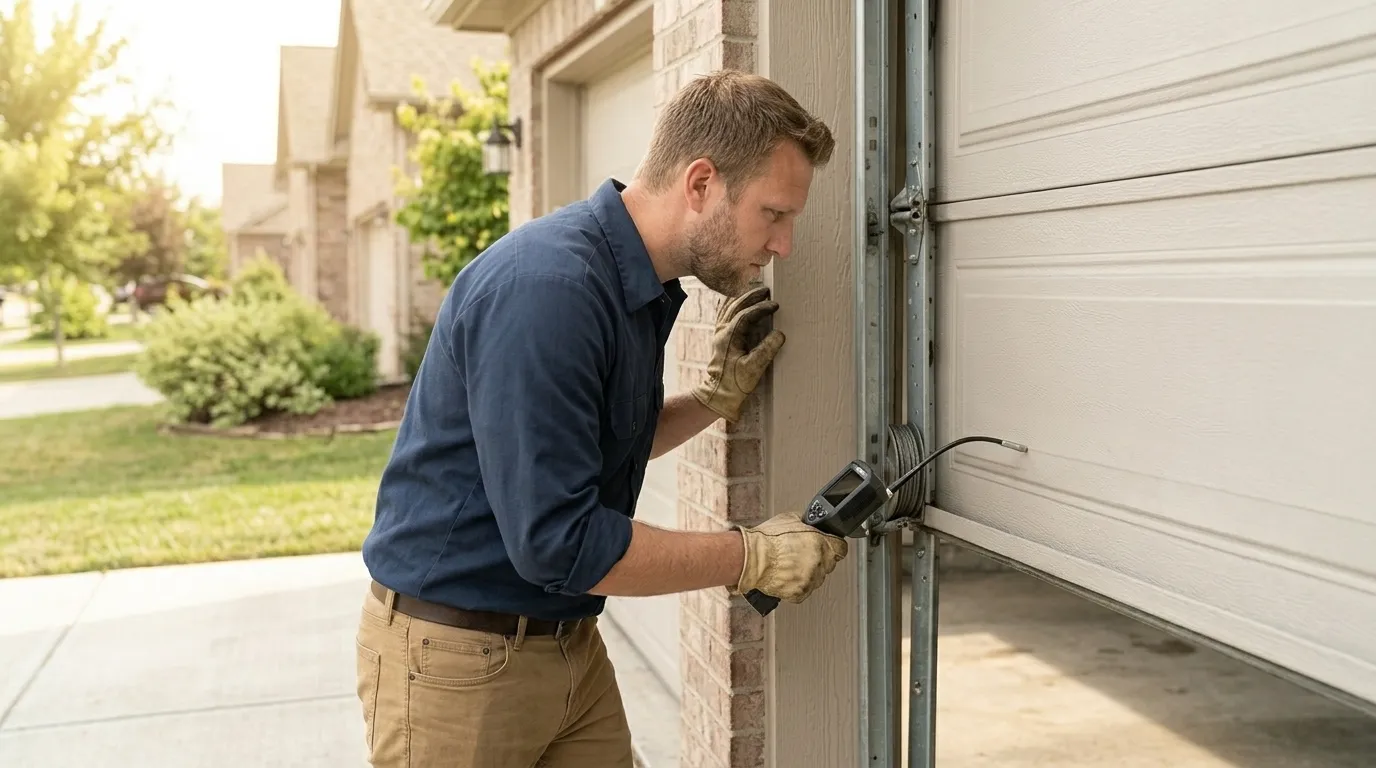
The actual repair starts with pulling the door manually to check balance - a door that won't hold position halfway up has a spring problem, not an opener problem, no matter what the opener is doing. From there it's usually one of three things: spring replacement, cable/roller replacement, or track realignment where the door has walked off its rail from years of settling. We check all three before we touch any of them, because swapping a spring on a door with a bent track just breaks the new spring faster.
How Long It Takes
Most single-repair jobs - one broken spring, a snapped cable, a section of bent track - are a one-visit fix once we're on site, but how long the visit itself runs depends on what we find once the door's open. A straight torsion spring swap on a door that's otherwise sound goes faster than a job where the drum, cable, and rollers all need replacing because they've been quietly wearing out together, which is common once a door's original hardware hits the 40-year mark.
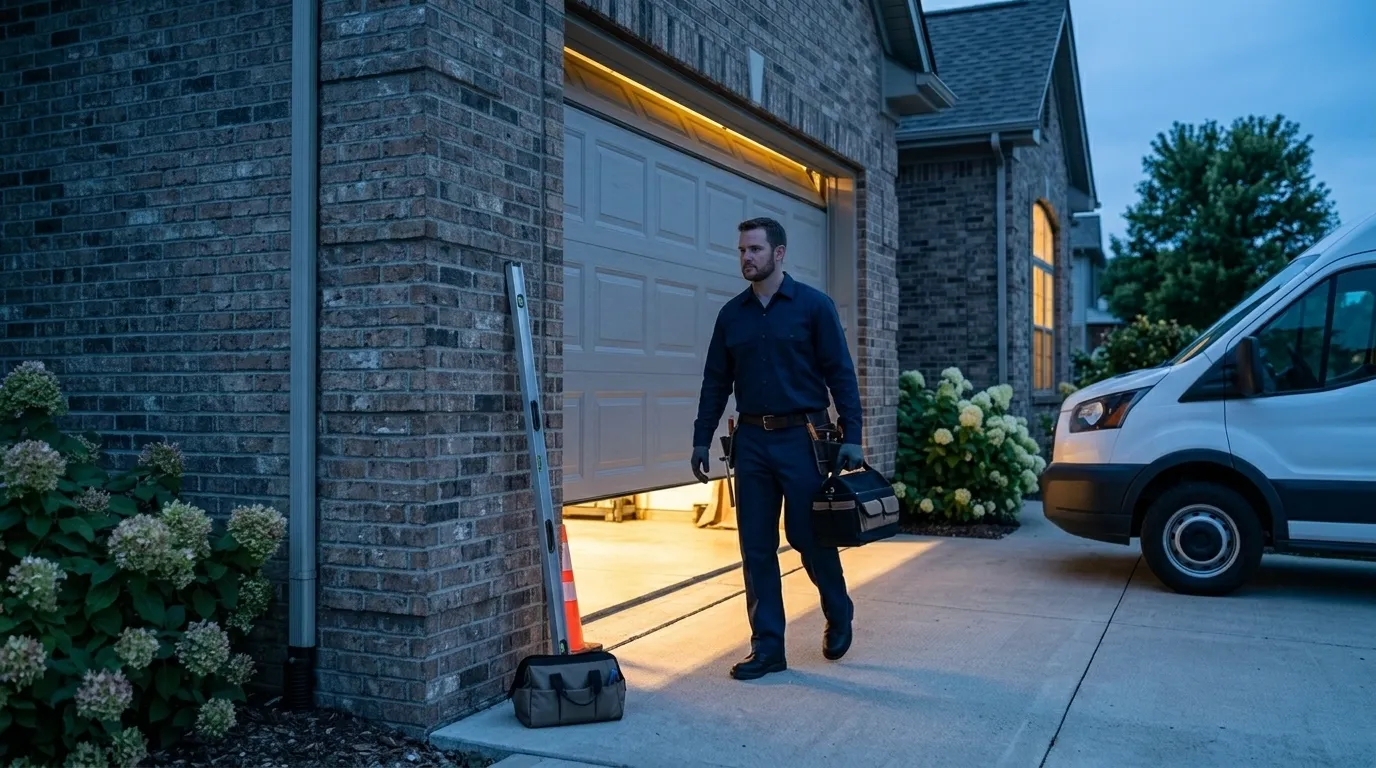
We don't quote a fixed turnaround before we've looked at the door, because the honest answer changes depending on whether it's a spring-only job or a full hardware refresh. What we can tell you is that we come from Strongsville, five miles out, so factor that drive into when we can get there rather than how long the repair itself takes once we're on site.