What Can Go Wrong
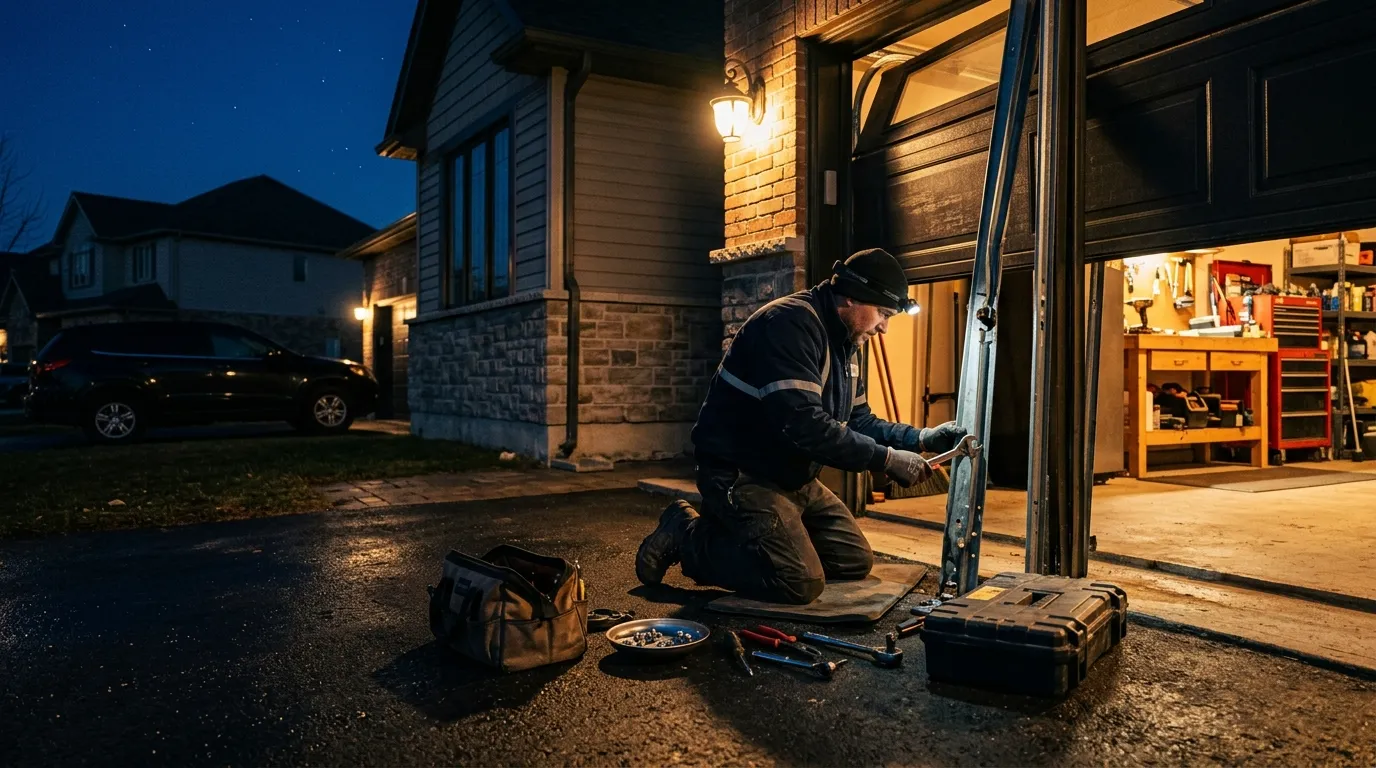
With roughly 14,574 households in Westlake, the volume of newer, similar-era garages means we see the same handful of failures repeat. The winter cold here is part of it - this whole service area sits in a severe cold climate band, and openers with weak circuit boards or worn drive gears fail more in a hard freeze because cold grease stiffens and the motor has to work harder against a door that's slightly bound.
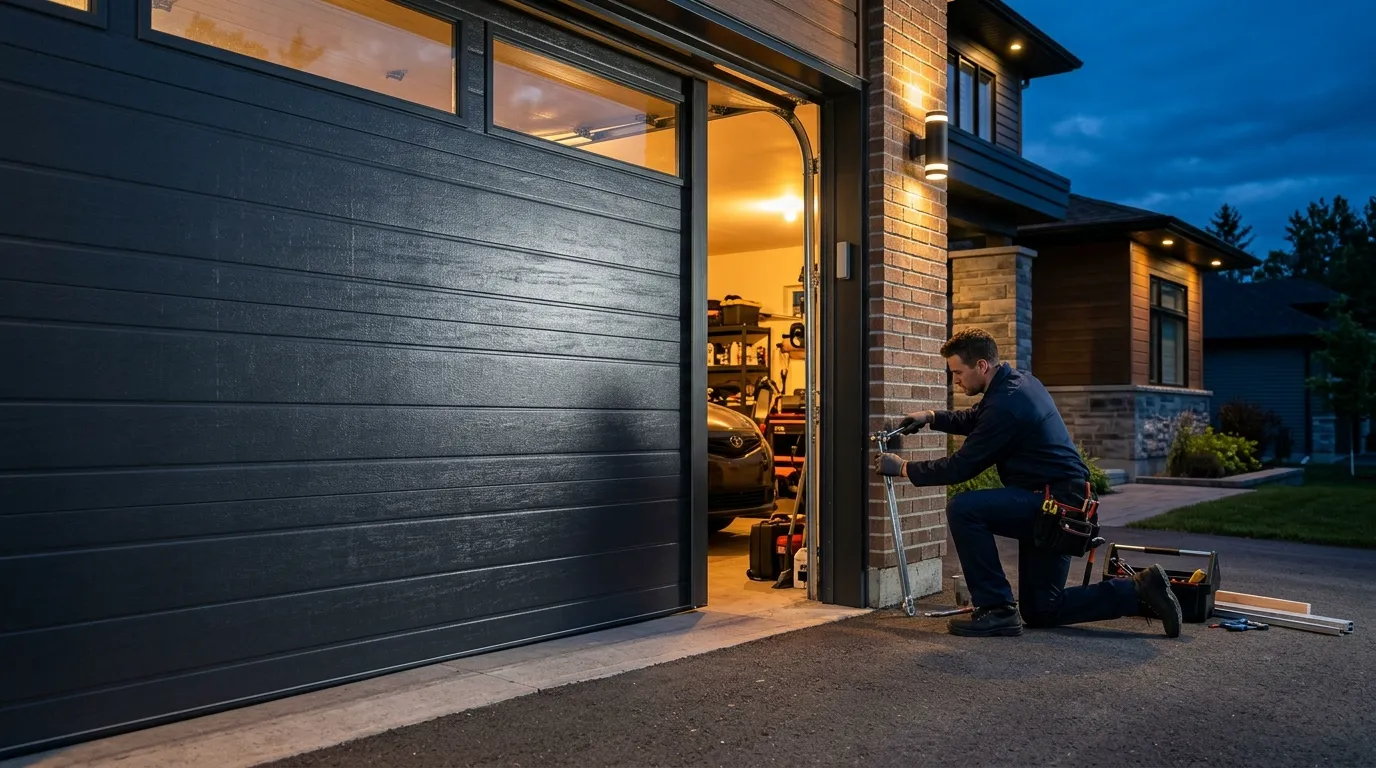
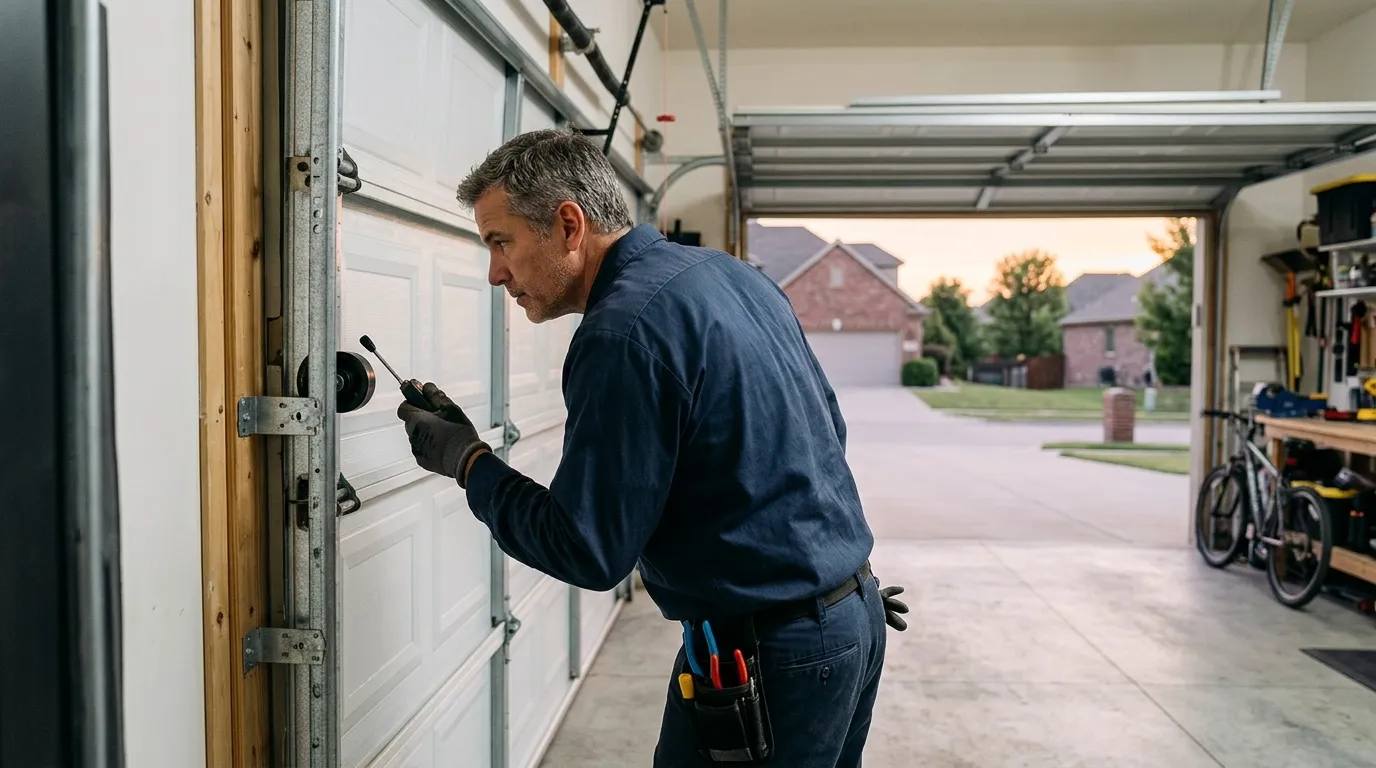
On 1980s-era doors, the most common call is a chain or belt that's slipped off track from a stripped sprocket, or a safety sensor knocked out of alignment - often from something leaning against it in the garage, not a defect. We also get openers that just quit responding to the wall button or remote, usually a dead logic board rather than the motor itself.
What we don't see as much here as in the older sections of the service area is rotted wood jamb pulling screws loose - newer construction usually means a solid header to mount to. That's a small mercy on install day, since a soft or split jamb adds real time to a job that would otherwise be routine.
Can You Do This Yourself
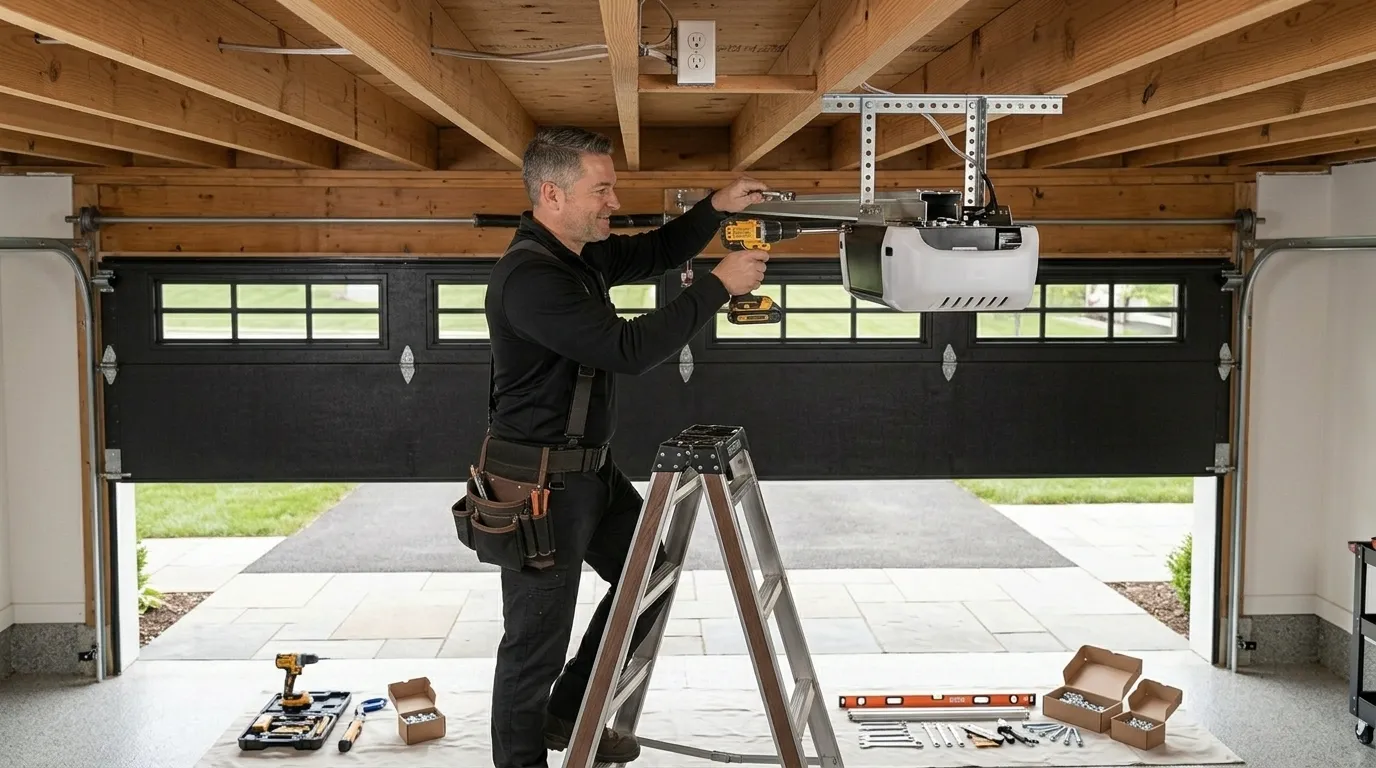
A DIYer can swap a remote battery or reset a code. Installing the opener itself is a different job - it means running a header bracket into solid framing, wiring a wall console, setting travel limits, and testing the safety-reversal sensors so the door won't close on something in its path. Get that wrong and you have a door that either won't seal or that keeps closing on a bike, a trash can, or worse.
We won't talk anyone out of trying if they're comfortable on a ladder and know their way around a drill, but we'd rather you call before you buy the wrong bracket kit for your rail length or wire a sensor backward. If you start the job and get stuck partway, we can usually finish it, but that costs more than starting clean.
What You Pay
We don't have a published price list for opener installs, and quoting a number here without seeing the door would be a guess, not a fact. What we can tell you is what changes the price: whether it's a straight swap onto existing brackets or a first-time install needing new wiring, whether you want belt-drive over chain (quieter, costs more), and whether the garage needs a wall console run or just uses the remote and keypad.
Westlake's median household income runs higher than much of the rest of our service area, and we get more requests here for the quieter belt-drive units and battery-backup models - not because we price differently by zip code, but because that's what people ask for when they're already looking at a newer garage.
What the Repair Takes
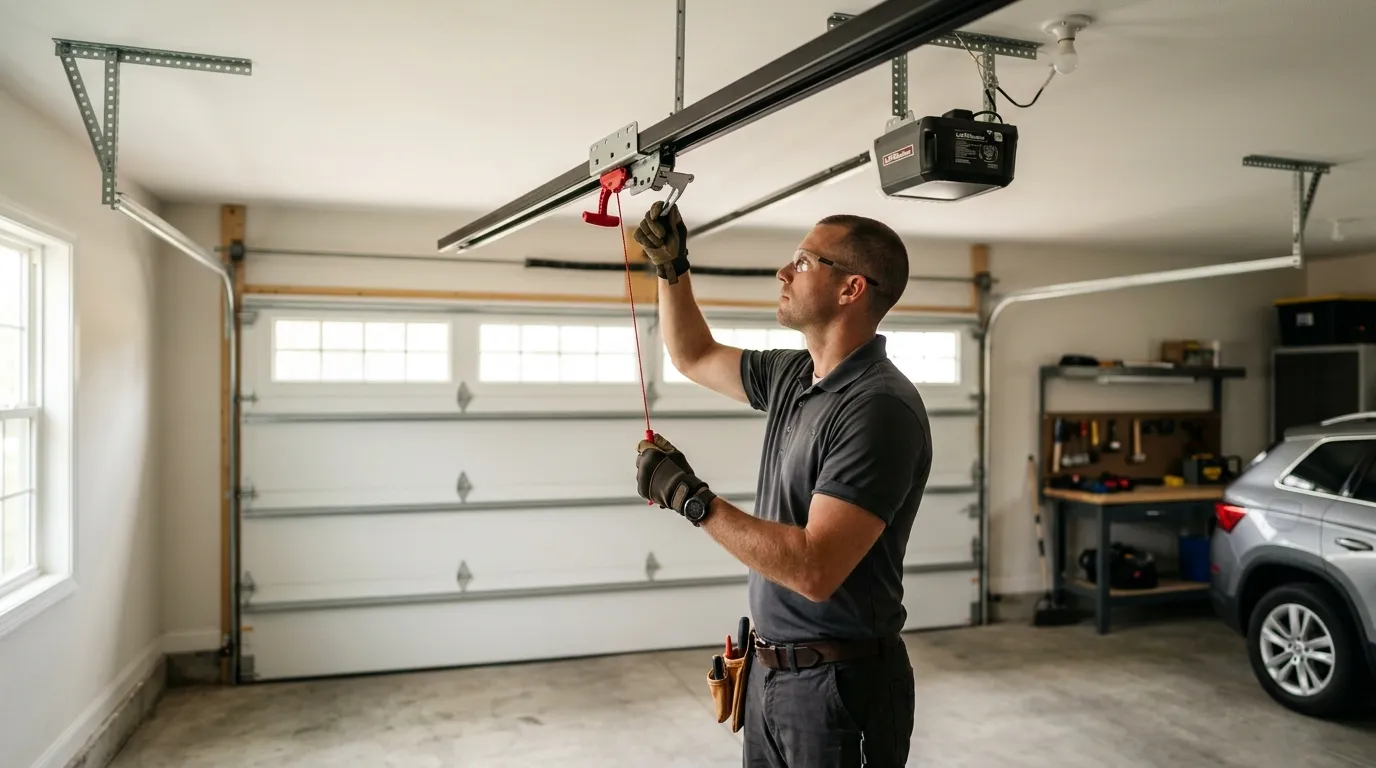
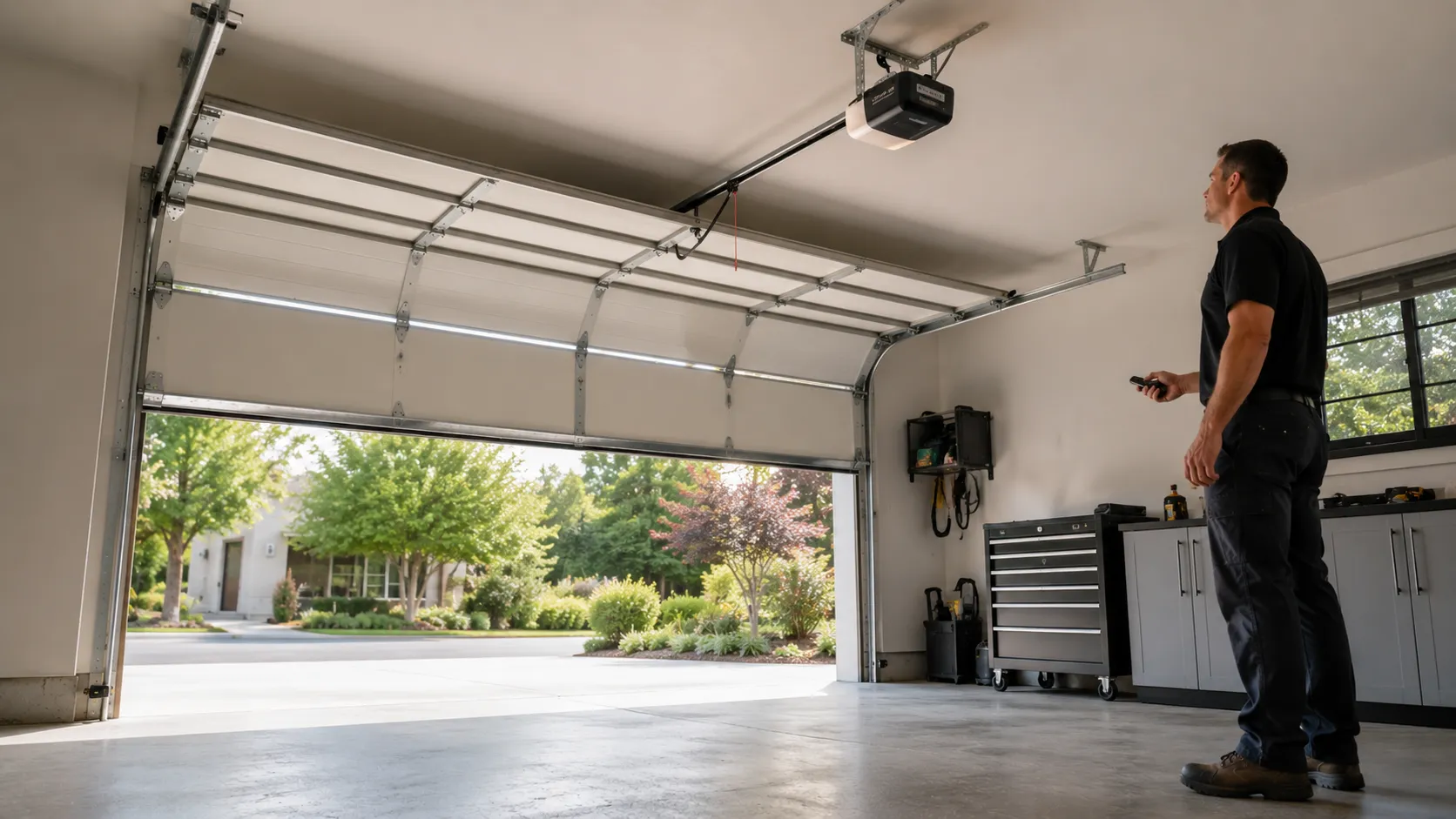
A straight opener swap - old unit off the bracket, new one up, rail set, sensors aligned and tested - is usually finished in one visit on a garage with solid framing, which is most of what we find in Westlake given the newer build era. Add time if the wiring needs rerunning for a wall console, or if we're installing from scratch on a door that's never had an opener.
We test the safety reversal before we leave every time - that's not optional and it's not fast, but it's the one step that actually matters if something ends up under the door later.