What Can Go Wrong
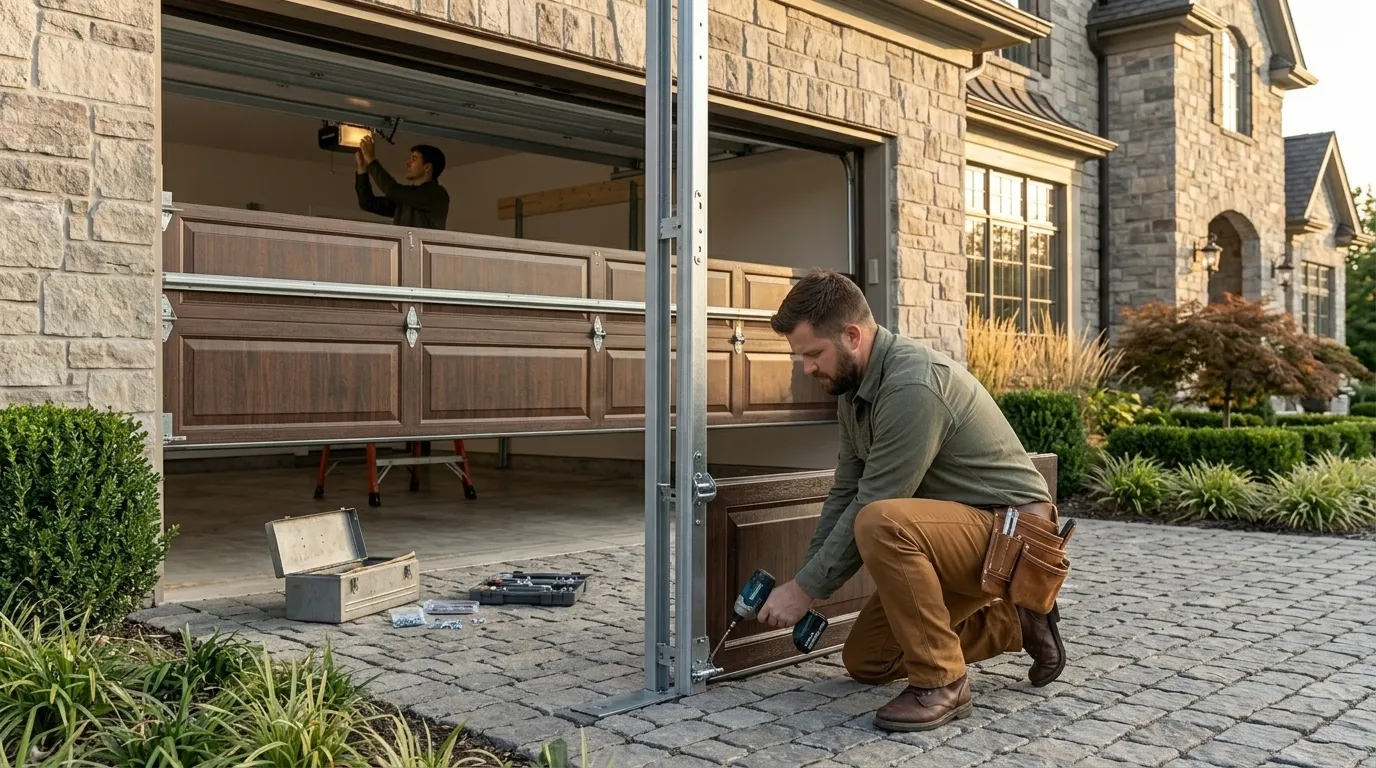
Cold does real damage to garage door openers here, and it's not just about the door - the region sits in a severe cold climate band, and that means hard freeze-thaw cycles on the opener's nylon drive gear, condensation forming inside control boards during warm spells between cold snaps, and start capacitors that give out faster from repeated cold-start strain. On a screw-drive or chain-drive unit installed when a Westlake house was newer, those parts are now old enough that failure isn't a matter of if.
There's a specific wrinkle for houses built around 1983: any opener original to that build predates the 1993 federal requirement for photo-eye safety sensors by a decade. If a house here still has its original unit - rare, but it happens - it may lack the sensor pair entirely, which isn't a repair job, it's a replacement job, full stop. More often we find retrofit sensors added later that are misaligned, corroded, or wired incorrectly from a past DIY fix. Stripped gears, dead logic boards, and worn trolley carriages round out most of what we see.
Can You Do This Yourself
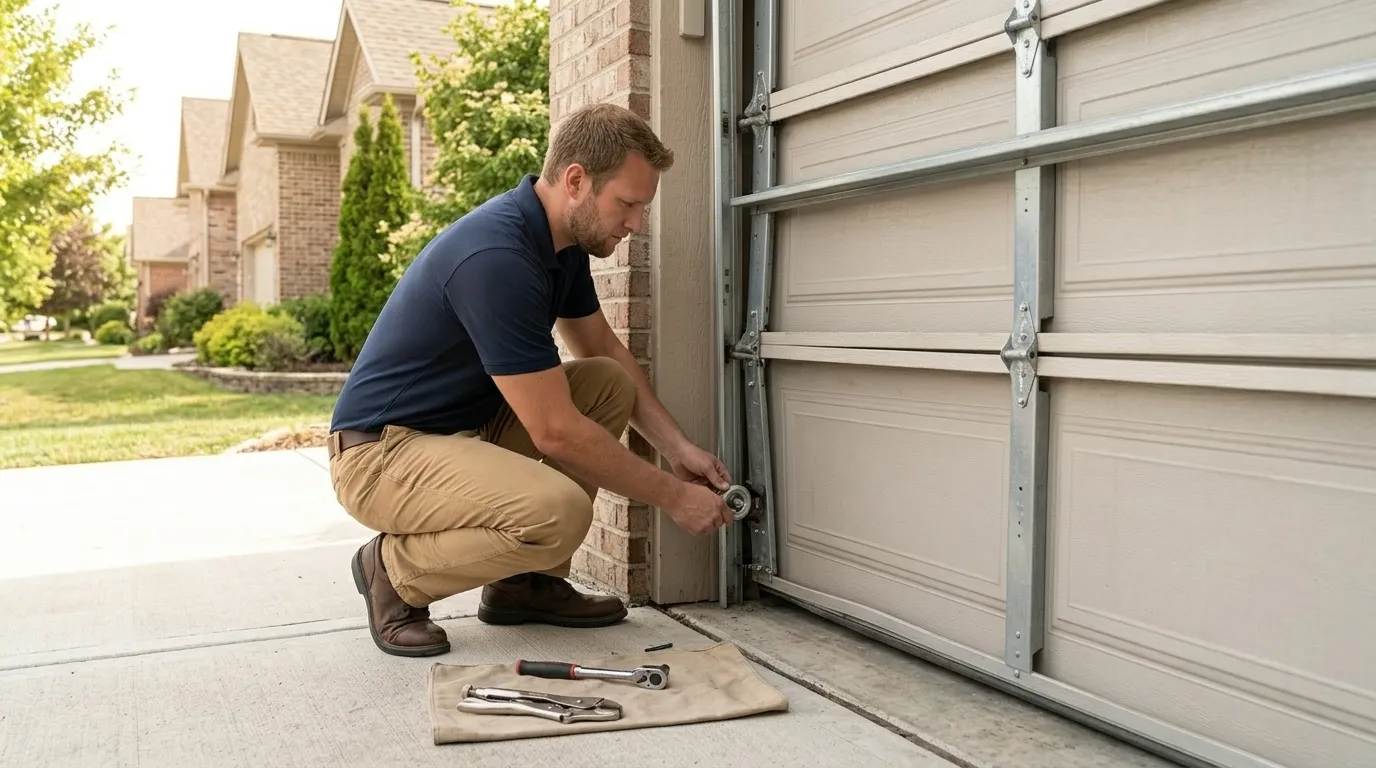
Some of it, yes. Swapping a remote battery, reprogramming a keypad code, and realigning safety sensors that have drifted out of position are all things a homeowner can do with a screwdriver and ten minutes. Check the sensor lights first - a blinking opener light is almost always a sensor alignment issue, not a motor problem.
What you shouldn't tackle yourself: a cracked drive gear, a failed circuit board, or a motor that hums but doesn't move the door. Openers carry spring tension and moving parts under load, and a mis-wired board or a gear replaced under the wrong torque setting can strip again within weeks - or worse, let the door drop. If your opener is original to a 1983-built house and lacks safety sensors altogether, that's not a project for a Saturday afternoon; that's a full-unit swap done right, with the safety hardware current code requires.
What You Pay
We don't post a flat price list because opener repair cost depends entirely on what's actually broken - a sensor realignment costs a fraction of a logic board swap, and a full unit replacement costs more than either. What we can tell you is where the math tends to land: Westlake's median household income runs $110,101, well above the $92,639 average across the rest of our service area, and at that income level, homeowners here more often choose a full opener replacement over a second or third repair on a unit already past fifteen years old. That's not us upselling - it's what the numbers on age and repeat-repair cost tend to show once you're past two service calls on the same motor. A younger unit with one bad part is worth fixing. An old screw-drive with a dead board and worn gears usually isn't.
What the Repair Takes
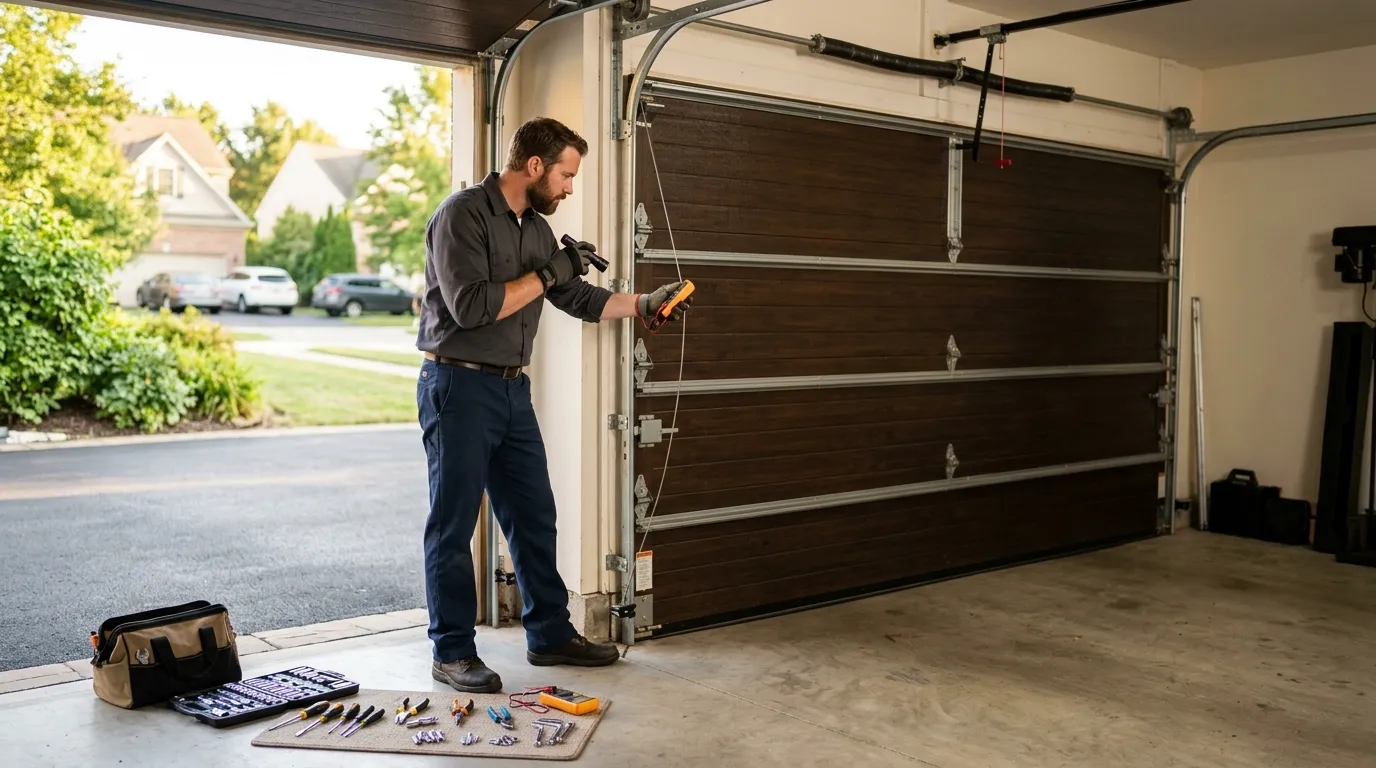
Most opener repairs are one visit: diagnose, replace the part, test the door through a full cycle. If the part's a common one - sensors, capacitor, remote, standard gear kit - it's on the truck and the job wraps that day. Specialty control boards for older or less common opener models sometimes have to be ordered, which means a return trip once the part's in.
A straightforward sensor or gear job runs well under an hour once we're on site. A full opener swap, including mounting a new motor unit and running new safety wiring, takes longer - plan for most of a morning or afternoon. Given the eleven-mile drive from Strongsville, we schedule Westlake calls in blocks rather than promising an exact arrival window; we'll give you a realistic estimate when you book, not a guess.