Attached or Detached: Why It Changes the Door Job in Strongsville
Strongsville homes built between the late 1930s and 2002 split fairly evenly between attached and detached garages, and the difference matters more here than most owners think.
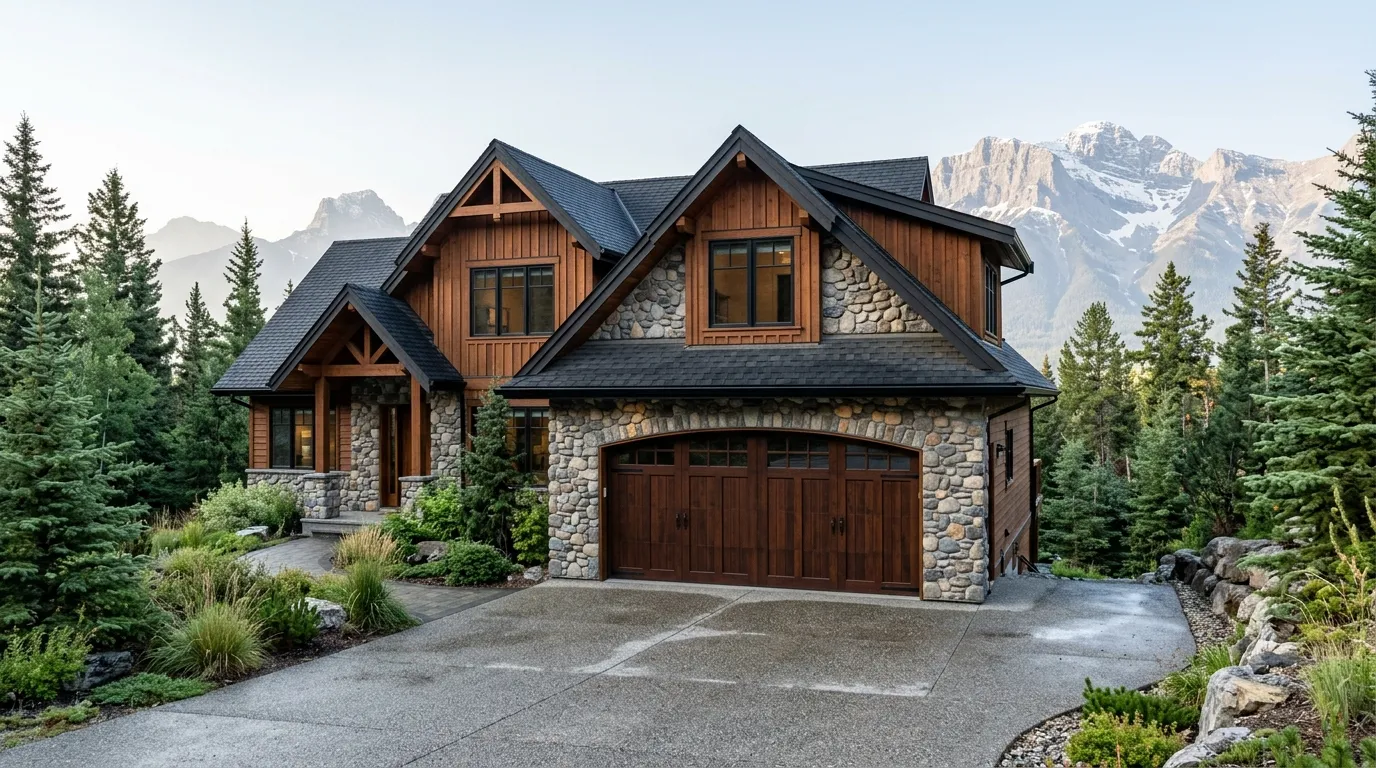
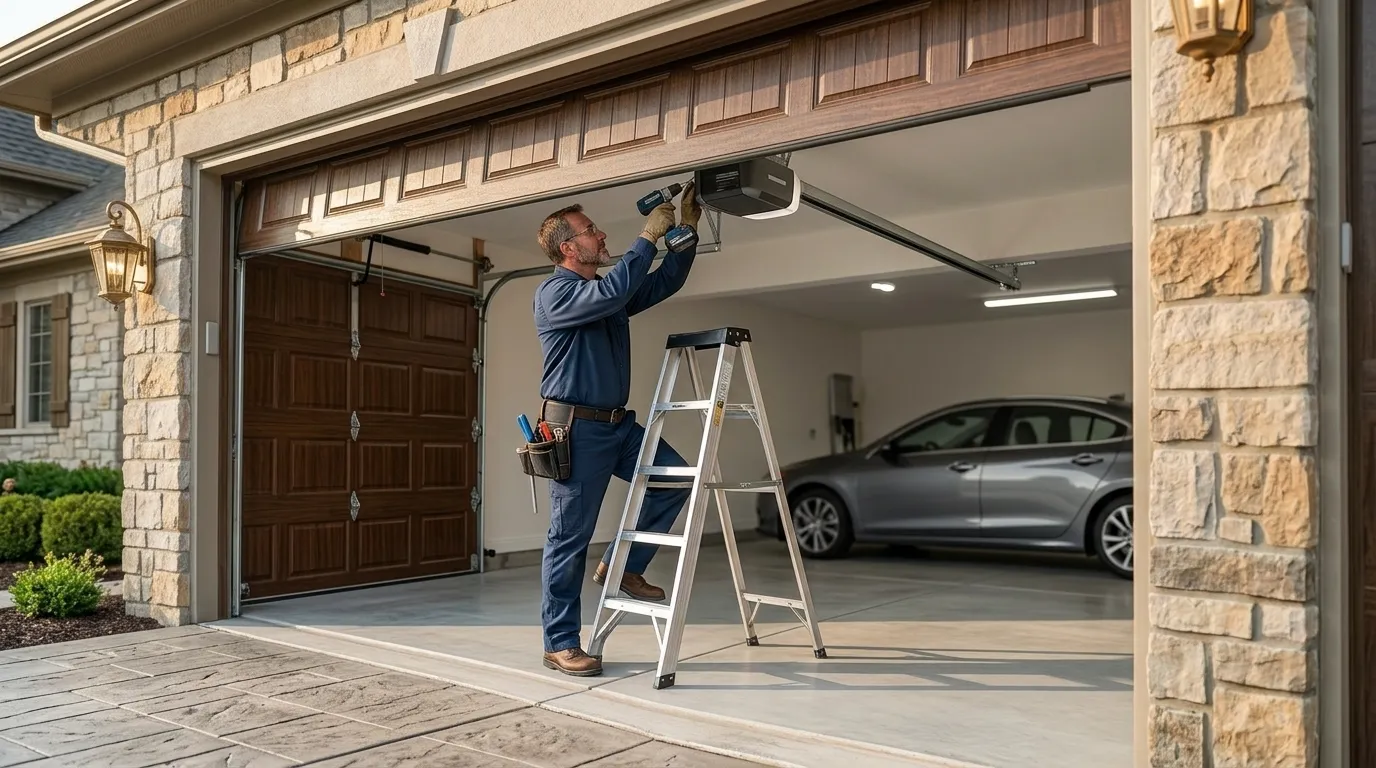
Strongsville's housing stock runs from 1938 up through 2002, with the median build year sitting at 1967 and most of the neighborhoods built out in the 1960s and 70s. That range matters because detached garages were far more common on the earlier lots, especially the ones built before the subdivisions filled in during the 60s and 70s boom. Newer construction, and a lot of the infill from the 80s and 90s, tends to favor attached garages built right into the house.
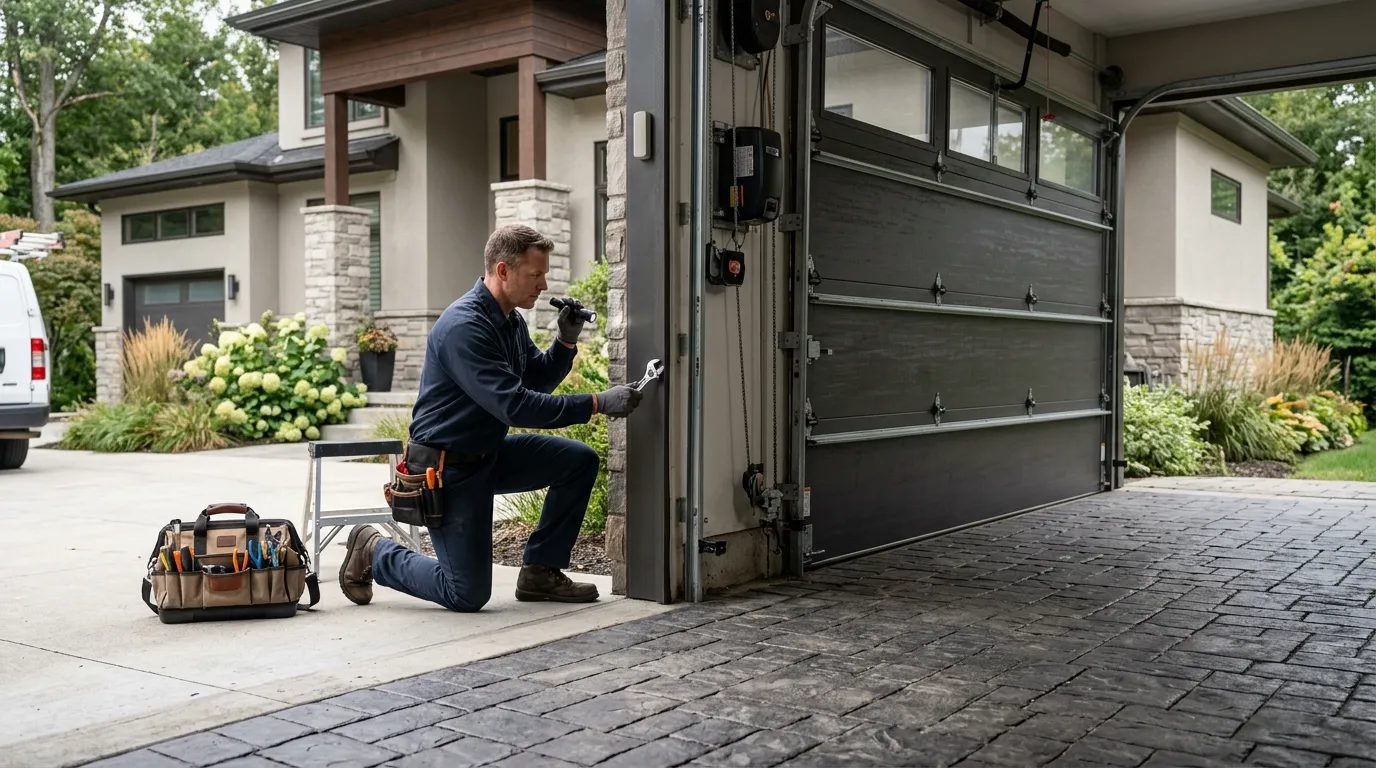
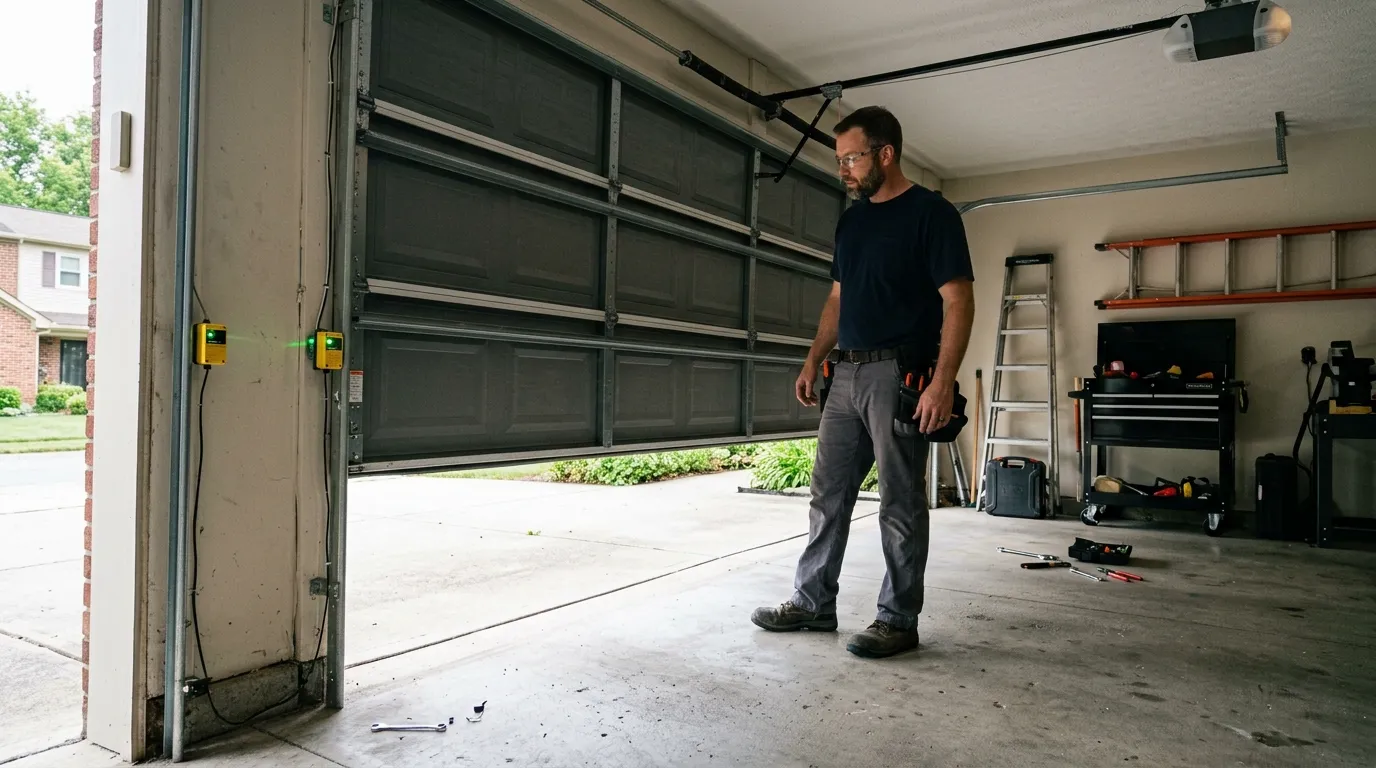
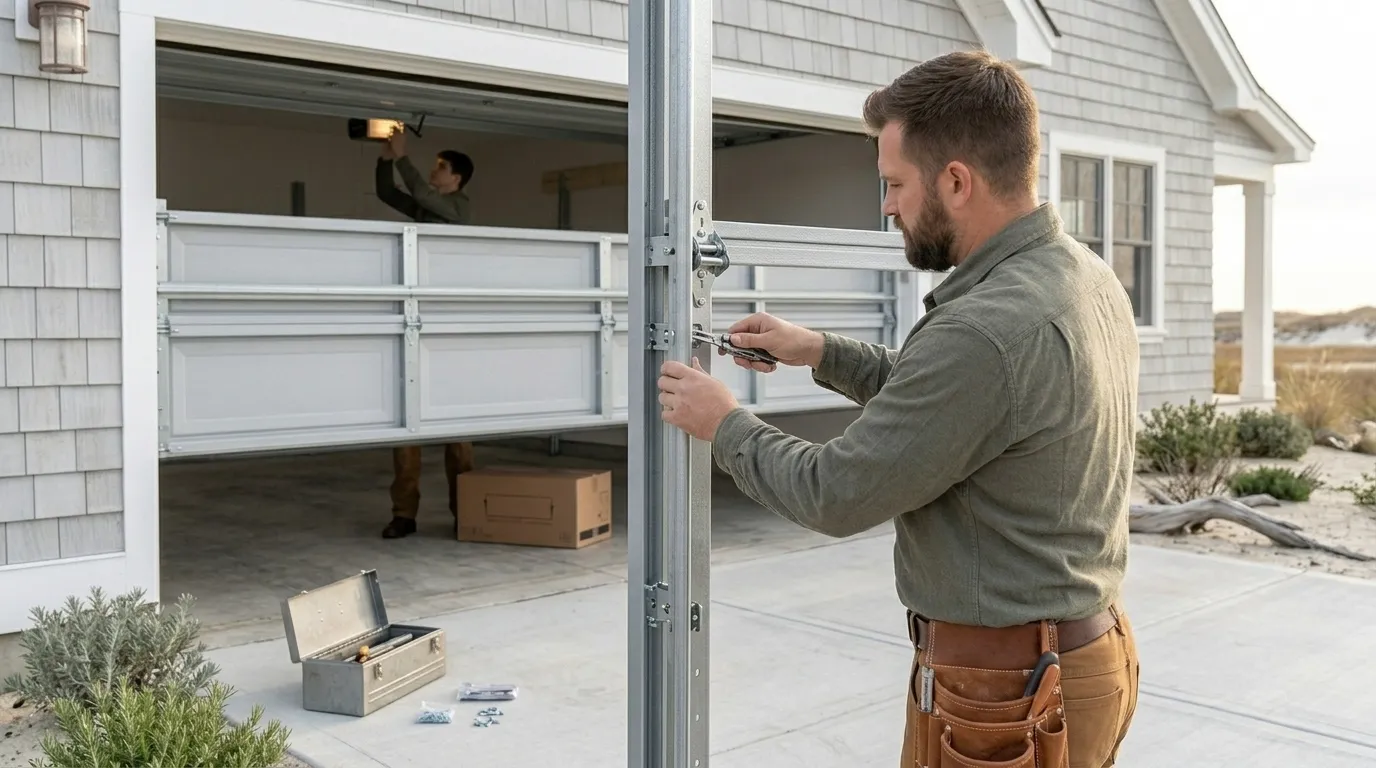
The practical difference shows up in how the door behaves. An attached garage usually shares a wall and sometimes a room above it, so the space stays a few degrees warmer in winter just from house heat leaking through. A detached garage out at the back of the lot gets none of that. It's exposed on all four sides, and in a cold-band climate like ours, that means the steel door panel, the hardware, and the opener are all running at outdoor temperature all winter long. Same door, same age, very different working conditions depending on which kind of structure it's bolted to.
If you're in one of the older pockets near Middleburg Heights or North Royalton, both about 4 miles out and part of the same general building era, you'll see the same split. Detached garages out there tend to be older wood-frame structures with doors that were never sized to today's insulation standards.
Doing Nothing For Now
A detached garage door that's a little stiff in January isn't necessarily an emergency. If it still opens, closes, and seals reasonably well, you can often wait out a rough patch of weather rather than book a call the day it starts groaning. Cold makes lubricant thicken and steel contract, and that alone can make a fine door feel like it's failing when it isn't.
Where waiting gets risky is on older detached structures from the 1938-1960s stretch of Strongsville's housing. Those buildings weren't built to modern frame tolerances, and a door that's been racking slightly against a settling jamb for years can go from "a little stiff" to "off the track" with one more hard freeze. Attached garages tend to be more forgiving here since they sit on the same foundation as the house and settle less unevenly.
One honest note: if the door on a detached garage is original to a house from that 1938-1961 range, we're not going to tell you to just keep adjusting it. At some point the frame and the door are working against each other and no amount of servicing changes that.
When to Call Someone
Call sooner on a detached garage than you would on an attached one. There's no shared wall to catch a partial failure, so if a cable frays or a roller cracks out there, the door can come down hard with nothing around it to slow the sound or the damage. On an attached garage, you'll often hear something scraping the drywall or a beam creak first, which buys you a little warning.
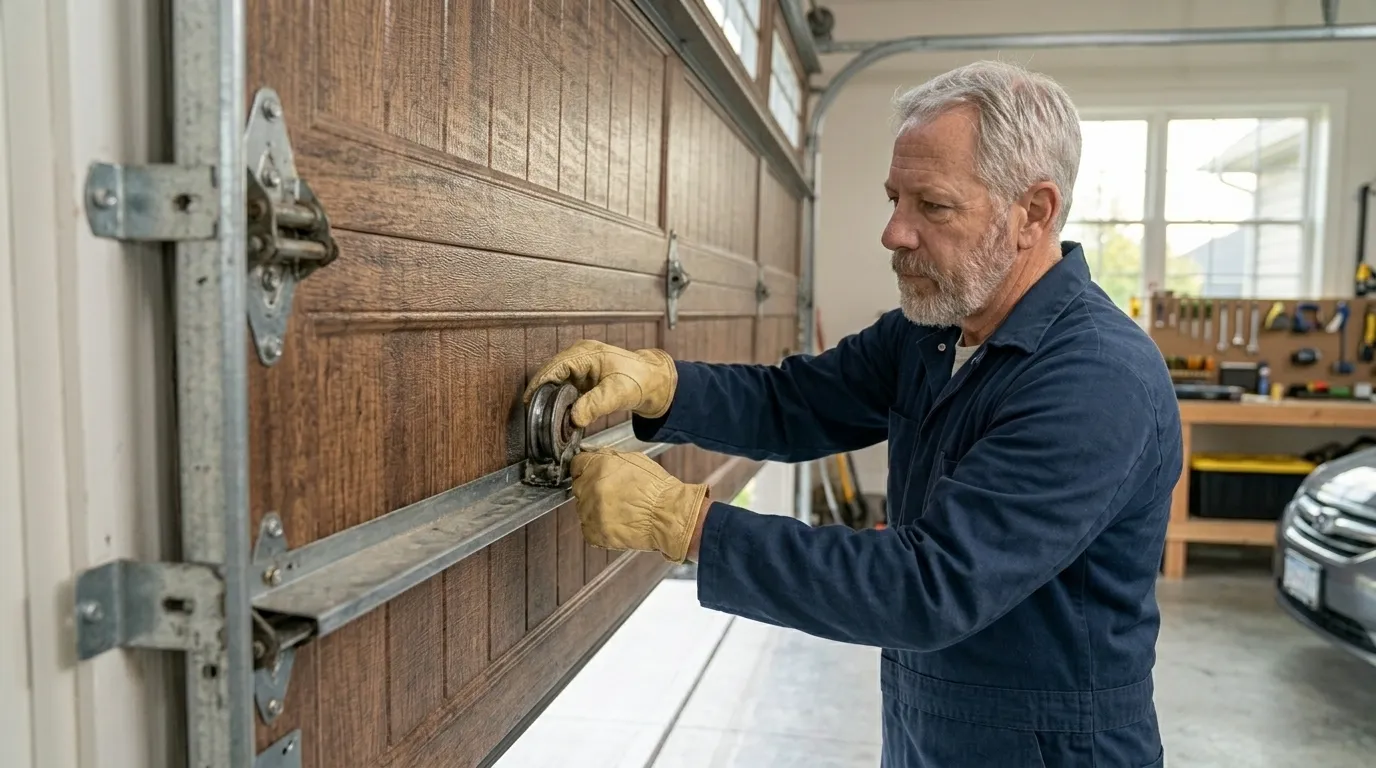
Signs worth a call either way: a door that's noticeably heavier to lift by hand than it used to be (spring going), a door that hangs crooked when it's about halfway up, or an opener that reverses right after touching the floor. On detached structures specifically, watch the panel seams in deep cold. A steel door with no adjoining heated wall behind it will show frost-line gaps at the bottom panel faster than an attached one will.
We don't recommend chasing every squeak with a service call. But a door that's binding, off-track, or reversing on its own isn't a wait-and-see item on either type of garage.
What Local Conditions Do
Strongsville sits in a cold-severe climate band, and that shows up differently depending on how the garage is attached to the house. Detached garages take the full swing of outdoor temperature on every side, so hardware lubricant, weatherstripping, and even the steel itself contract more and faster than they do on an attached structure that's getting some residual heat from the house. That's why detached doors in this area tend to need weatherstrip and hardware attention on a shorter cycle.
Attached garages aren't immune, but the shared wall buffers the worst of it, and if the garage is under conditioned living space, the ceiling side stays close to house temperature year-round. That's common in the newer end of Strongsville's build range, closer to 2002, where attached two- and three-car garages became standard.
Across the wider service area there are roughly 249,670 households and 133,448 owner-occupied houses, with a median household income around $92,639 - enough that most owners here choose to replace an aging detached door with an insulated one rather than keep patching a bare steel panel through another winter.
How it works
From “it’s stuck” to “it’s fixed”
01
Tell us what’s wrong
Describe the symptom - won’t open, loud bang, opener runs but the door won’t move.
02
On-site diagnosis
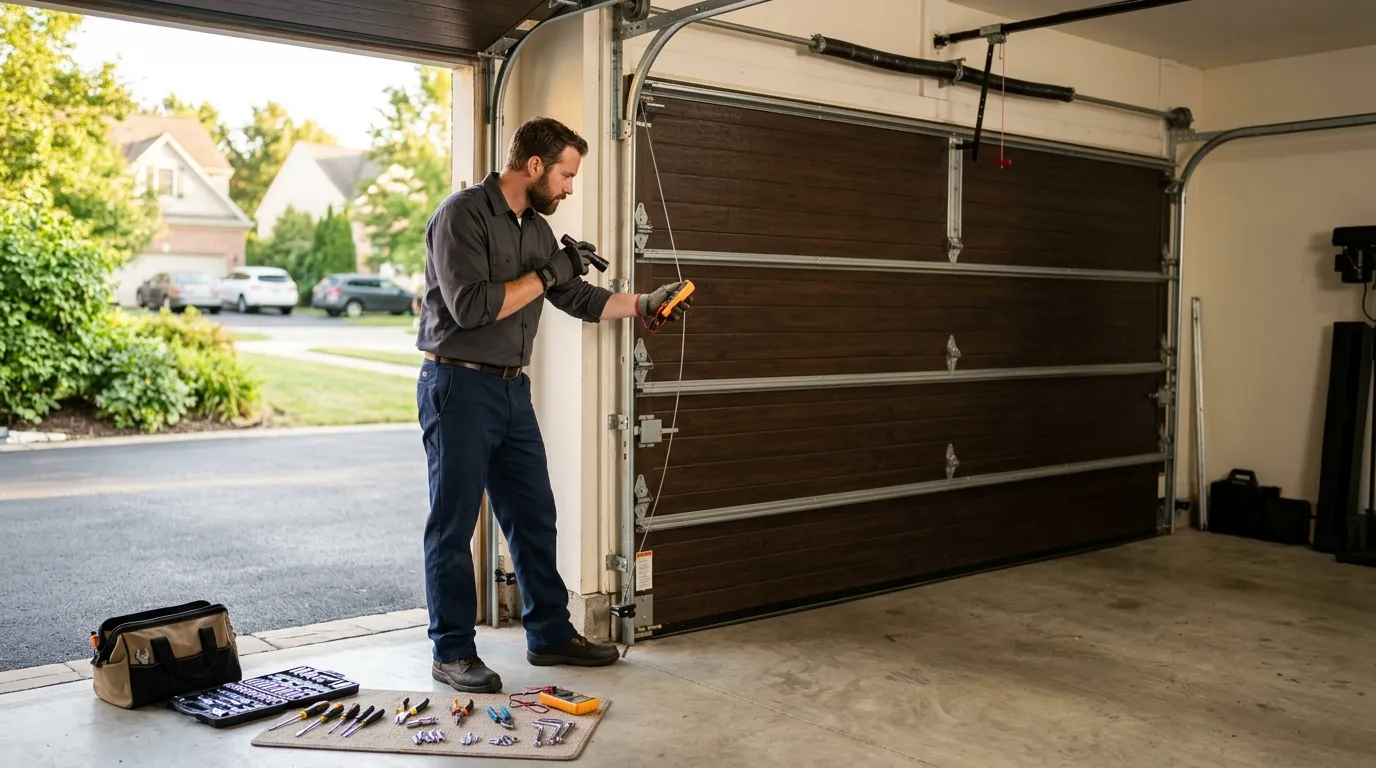
A technician tests the door under power and by hand and finds what actually failed.
03
Clear, up-front plan
You get the fix that’s needed and what drives the cost - before any work starts.
04
Repaired & tested
The repair is done, the door is set true and tested, and the work area left clean.
Serving Strongsville, OH - tell us what your door’s doing and we’ll take it from there.
Does a detached garage door need a different kind of service than an attached one?
Not a different kind, but a different schedule. Detached doors in Strongsville's cold-severe climate take the full outdoor temperature swing on all sides, so hardware and weatherstripping wear faster. Attached doors get some buffering from house heat, especially in homes built toward the newer end of the 1938-2002 range.
Is it worth replacing an old detached garage door instead of repairing it?
If the garage is original to a house from the 1938-1961 stretch of Strongsville's building era, the frame has often settled enough that the door is fighting the jamb, not just wearing out. At that point most owners here replace rather than keep adjusting - it's a judgment call, but it's a real one.
Why does my attached garage door feel warmer to the touch than my neighbor's detached one?
An attached garage shares at least one wall, and often the ceiling, with heated living space. That leaks warmth into the garage even without direct heating. A detached structure a few hundred feet from the house has nothing behind it but outdoor air, which matters in a cold-severe climate band like ours.
Ready to get your garage door sorted?
Tell us what it’s doing and where you are in Strongsville - we’ll take it from there.