Why So Many Strongsville Garage Doors Have No Insulation
Strongsville homes built between 1938 and 2002 mostly predate insulation codes for garage doors. Here's what that means for a house in a severe-cold climate band.
Housing in this area was mostly built between 1938 and 2002, with the median landing around 1967, and the bulk of that stock going up through the 1960s and 70s. That matters for garage doors because insulation requirements for residential doors weren't part of the picture yet when most of these houses were framed. A door put on a house in 1967 was a single layer of steel or wood, no foam core, no thermal break at the track, nothing behind the skin but air.
That's not a flaw in the house. It's just what a door was, at the time. The problem shows up now, decades later, when that same original-era panel is still hanging on the same track in a garage that shares a wall with a living space, or sits under a bonus room. Across the dozens of neighborhoods in this stretch of Ohio, the pattern is consistent enough that if you know the decade a subdivision went in, you can guess the door before you see it: steel, flat, uninsulated, and original or close to it.
Doing Nothing For Now
Not every uninsulated door needs to come off this year. If the garage is detached, or isn't heated, or doesn't back onto living space, an old single-layer door isn't costing you much beyond a slightly colder garage in January. Plenty of houses in this area run that setup fine for another decade.
Where it starts to matter is attached garages under or beside conditioned rooms. A cold climate band like this one pushes a lot of temperature difference across that thin steel skin, and over a long winter that shows up as condensation on the inside of the panel, sometimes enough to drip. If you're not seeing rust streaks, sagging on the bottom panel, or ice building up around the weatherstrip, you can reasonably wait. We won't tell you to replace a door that's still doing its job just because it's old. That said, waiting means keeping an eye on it, not forgetting about it.
When to Call Someone
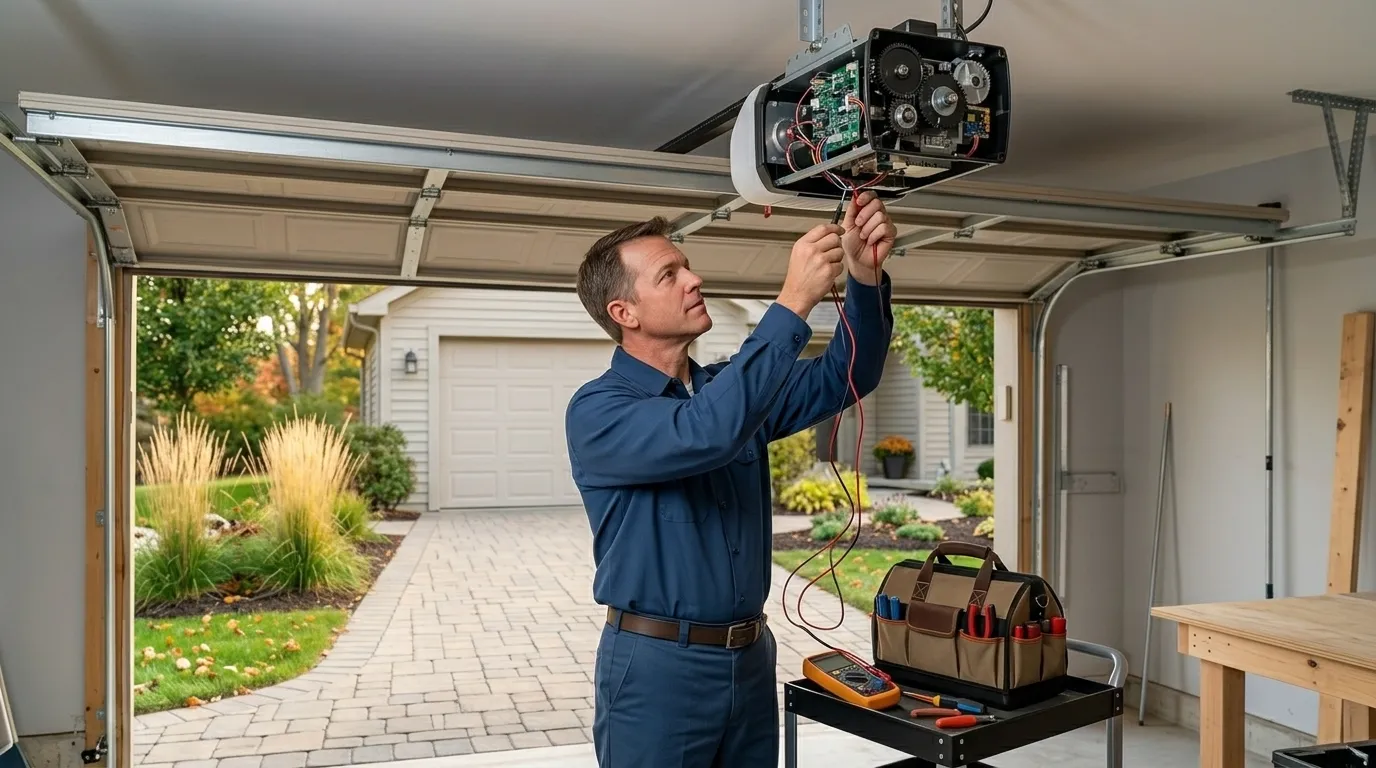
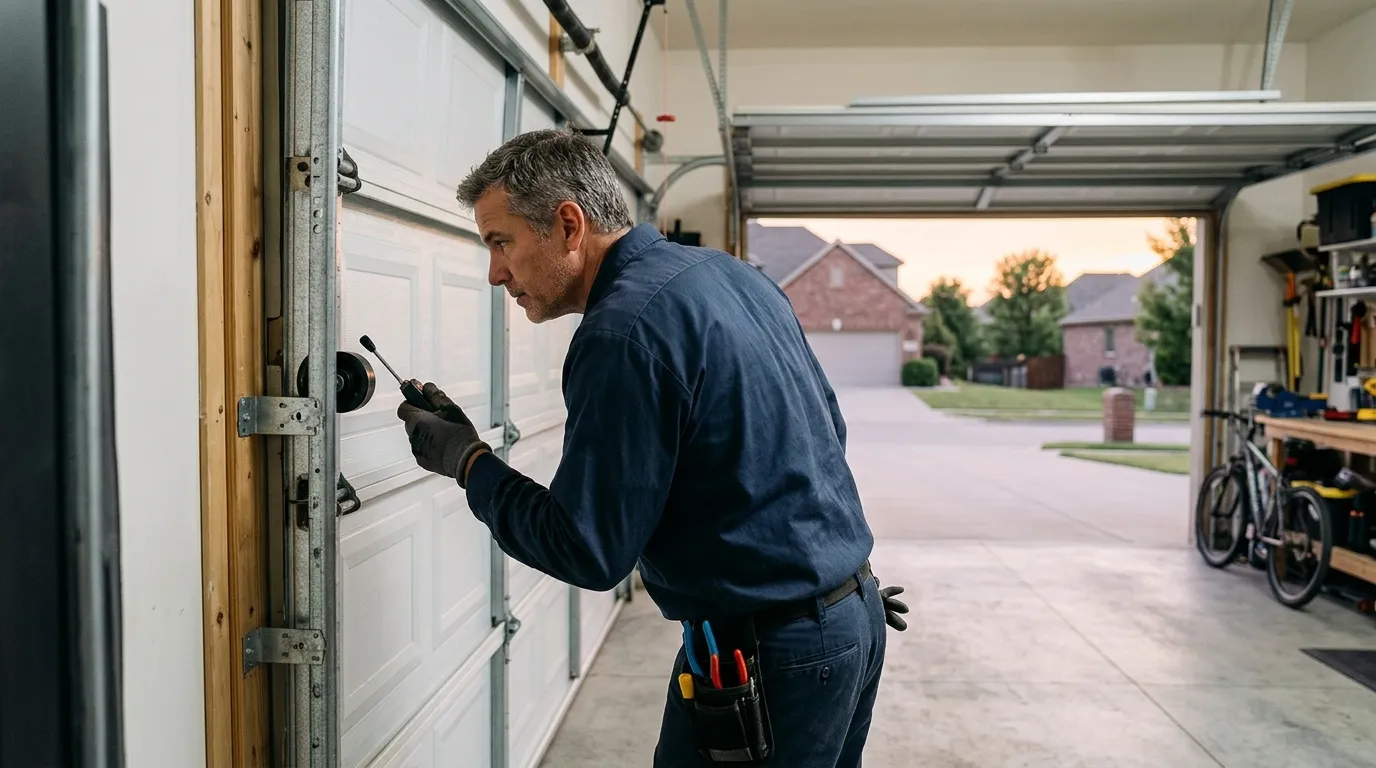
Call when the symptoms move past cosmetic. On a door this old, the things worth a look are: hardware fatigue on original torsion springs and hinges that have outlived their rated cycles, rust at the bottom panel where condensation has been pooling for years, and a track that's shifted slightly out of plumb from decades of a heavier steel panel dragging on it in the cold.
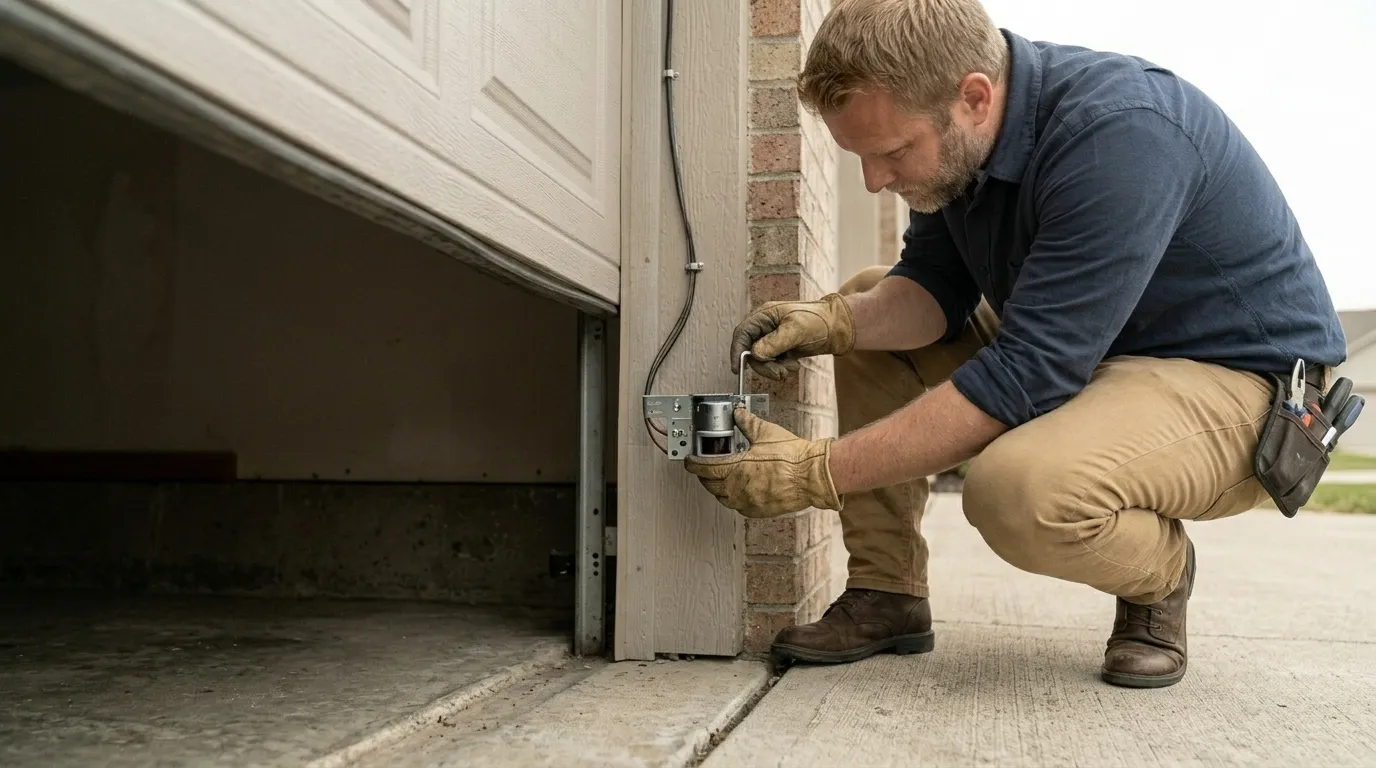
Cold makes hardware brittle before it makes it obviously broken. A spring or cable that's been flexing through severe winters since the 1960s or 70s doesn't always give you warning before it lets go. If the door is original to a house from that era and you've never had the springs replaced, that's worth a call regardless of how the door looks from the outside. We'll tell you honestly if a repair makes sense or if the door's had its run - sometimes patching an original panel costs more over time than swapping it for something built for the winters here.
What Local Conditions Do
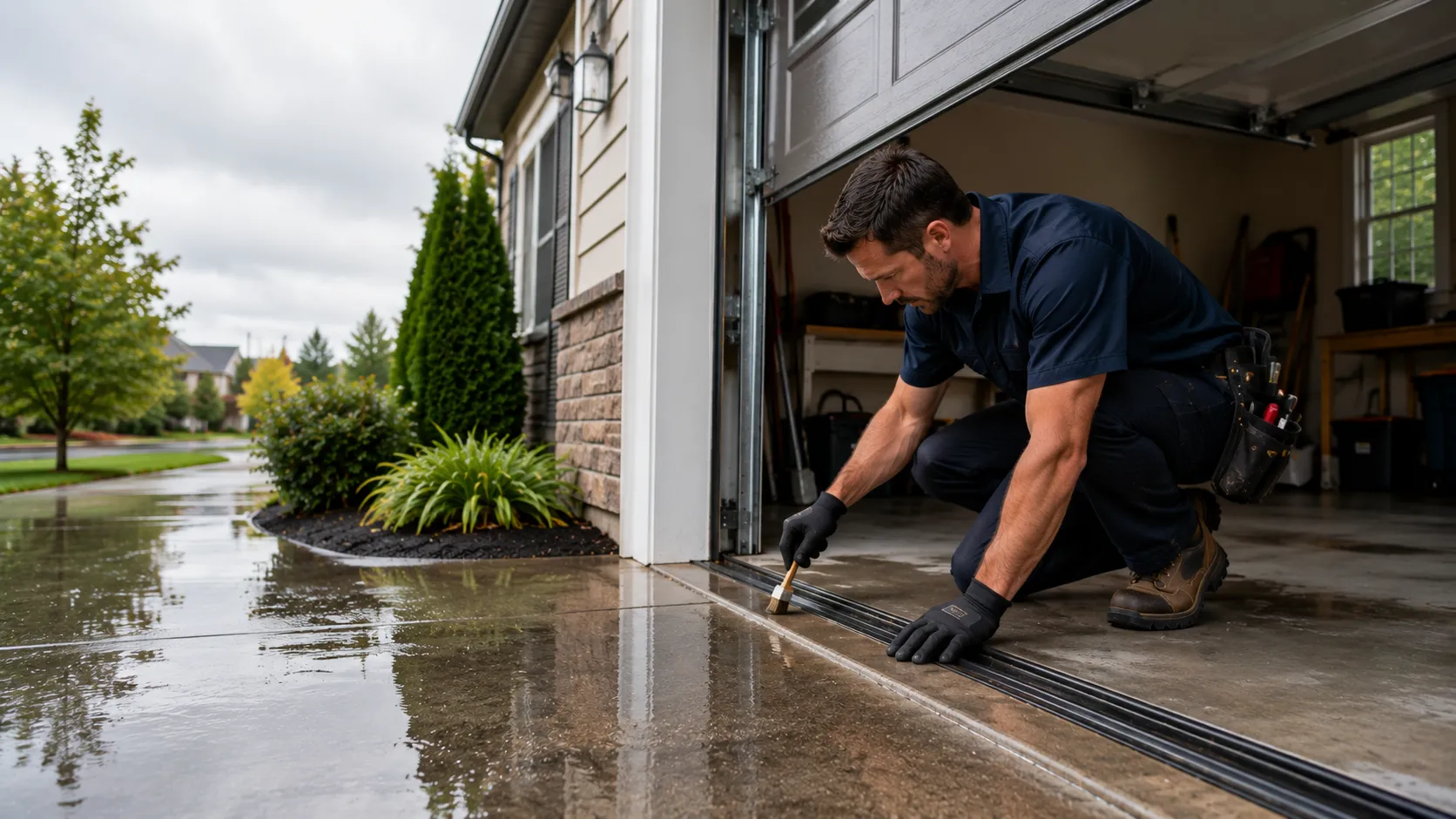
A severe cold climate band does specific things to an old, uninsulated door that a milder climate wouldn't. Steel contracts, and an original single-layer panel with no foam backing flexes more in a hard freeze than an insulated one does, which loosens fasteners and hinges faster over the years. Condensation forms on the inside face when warm garage air meets a cold steel skin, and on a door that's been up since the 1960s, that moisture has had a long time to work on any exposed metal at the bottom panel and track.
It also affects the opener side of things. Grease in an original-era hardware set thickens in deep cold, torsion springs lose a bit of tension as steel contracts, and a door that already runs on an aging track has less margin for the extra strain. None of this is unique to any one street - it's the same physics acting on the same era of construction across this whole stretch of housing, which is exactly why the age of the door matters more here than in a milder region.
How it works
From “it’s stuck” to “it’s fixed”
01
Tell us what’s wrong
Describe the symptom - won’t open, loud bang, opener runs but the door won’t move.
02
On-site diagnosis
A technician tests the door under power and by hand and finds what actually failed.
03
Clear, up-front plan
You get the fix that’s needed and what drives the cost - before any work starts.
04
Repaired & tested
The repair is done, the door is set true and tested, and the work area left clean.
Serving Strongsville, OH - tell us what your door’s doing and we’ll take it from there.
Does my garage door need to be insulated if my house was built in the 1960s or 70s?
Not automatically. It depends on whether the garage is attached and heated, or shares a wall with living space. Plenty of original steel doors from that era are still fine on detached or unheated garages. The concern is mainly for attached garages in this climate band, where an old uninsulated panel drives condensation and higher heat loss.
How do I know if my garage door is original to the house?
Look for a flat steel panel with no visible foam edge or thickness at the seams, thin single-layer construction, and hardware that looks like it matches the house's build era. If you've never had it replaced and the house dates to the 1960s or 70s, it's very likely original.
Is condensation on my garage door a real problem?
It can be. In a severe cold climate, condensation on an uninsulated steel panel is normal in mild form, but if it's pooling at the bottom, causing rust, or dripping, that's moisture doing long-term damage to the panel and nearby hardware. Worth having someone look at it before it spreads to the track or springs.
Ready to get your garage door sorted?
Tell us what it’s doing and where you are in Strongsville - we’ll take it from there.