Strongsville homes built mostly in the 1960s and 70s hit winter cold that pulls track bolts loose and warps rollers. Here's what actually knocks a door off its rails.
Most houses on this side of Strongsville went up between 1938 and 2002, with the bulk of that stock dating to the 1960s and 70s. That matters more than people think, because a door built for a house from that era is running on track brackets that were lag-bolted into framing that's had sixty-plus years to shift, dry out, and settle. The track itself doesn't wear out so much as the wood behind it does. Bolts back out a sixteenth of an inch at a time, the bracket rocks under load, and one day the roller pops the lip of the track instead of riding inside it.
Add a cold-climate winter to that and you get a second failure mode stacked on top of the first: steel track contracts in the cold, and if the alignment was already borderline from loose brackets, the shrink is enough to bind a roller against the rail edge. The door doesn't glide off the track dramatically most of the time - it walks off a quarter inch at a time until one cycle it doesn't come back, usually on the coldest morning of the stretch when everything's tightest.
A bent track from a car bumper is the other common cause, and that one's obvious the moment you see it - a clean bow in the rail where the bumper caught it.
Doing Nothing For Now
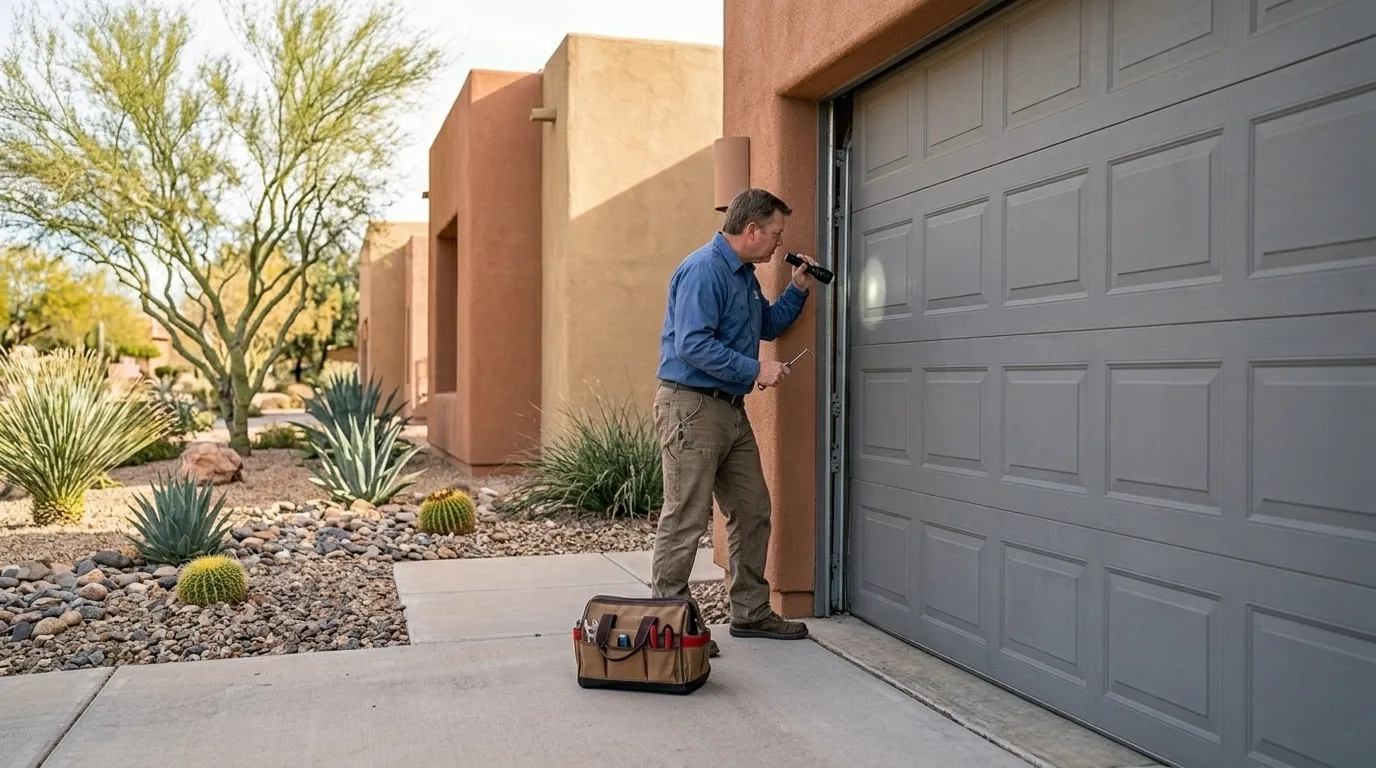
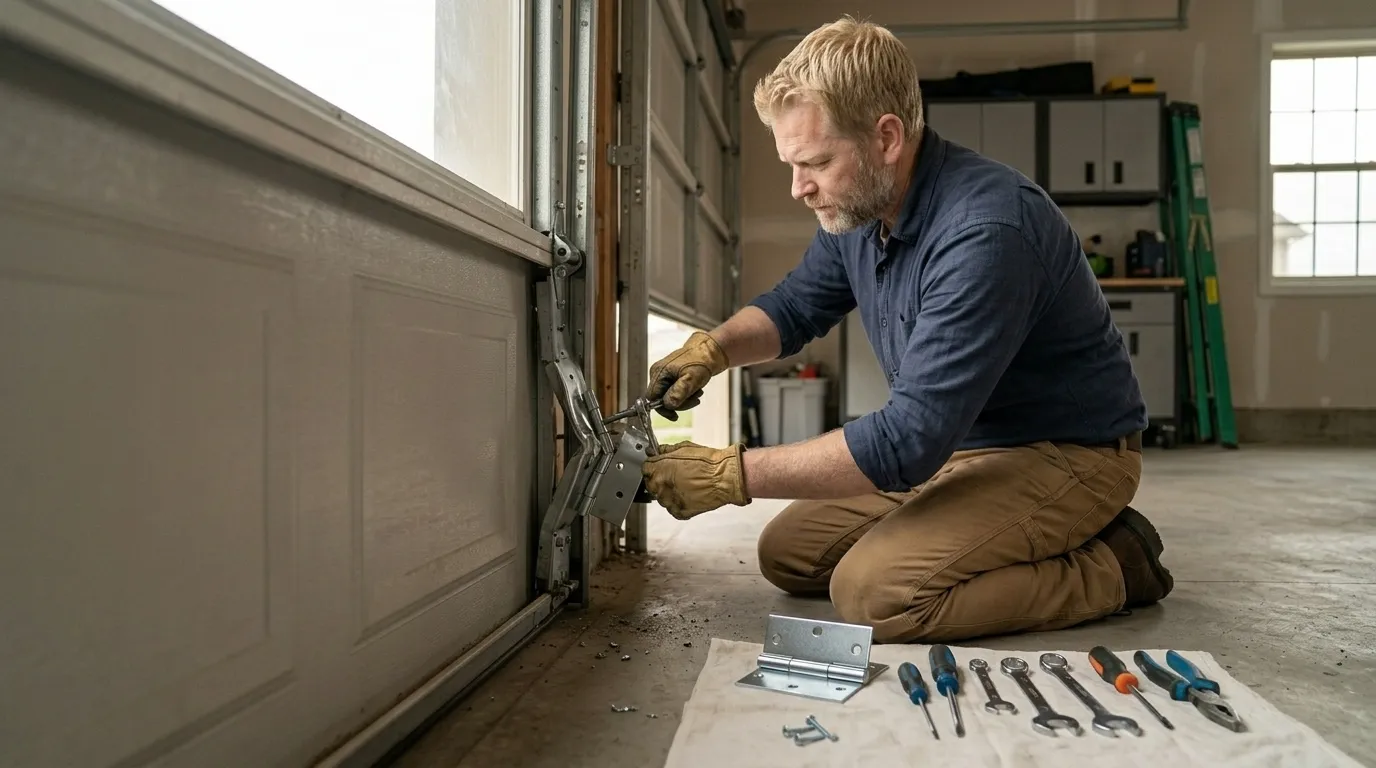
If the door still opens and closes and the roller is just riding a little high on one side, you can watch it for a while. Check that the track bolts are snug - a wrench and ten minutes will tell you if that's your problem before it's anyone else's. Loose bolts on their own don't need a truck, they need a tightening.
What you shouldn't do is keep running the opener through a door that's visibly leaning or scraping the track on one side. In a severe cold climate like this one, a door that's marginally misaligned in October is often fully off the rail by January, because the same contraction that made the gap noticeable in fall gets worse, not better, once real cold sets in. Waiting through a mild stretch to see if it works itself out is the one thing that reliably makes it worse - metal doesn't self-correct, it just finds the next weak point.
When to Call Someone
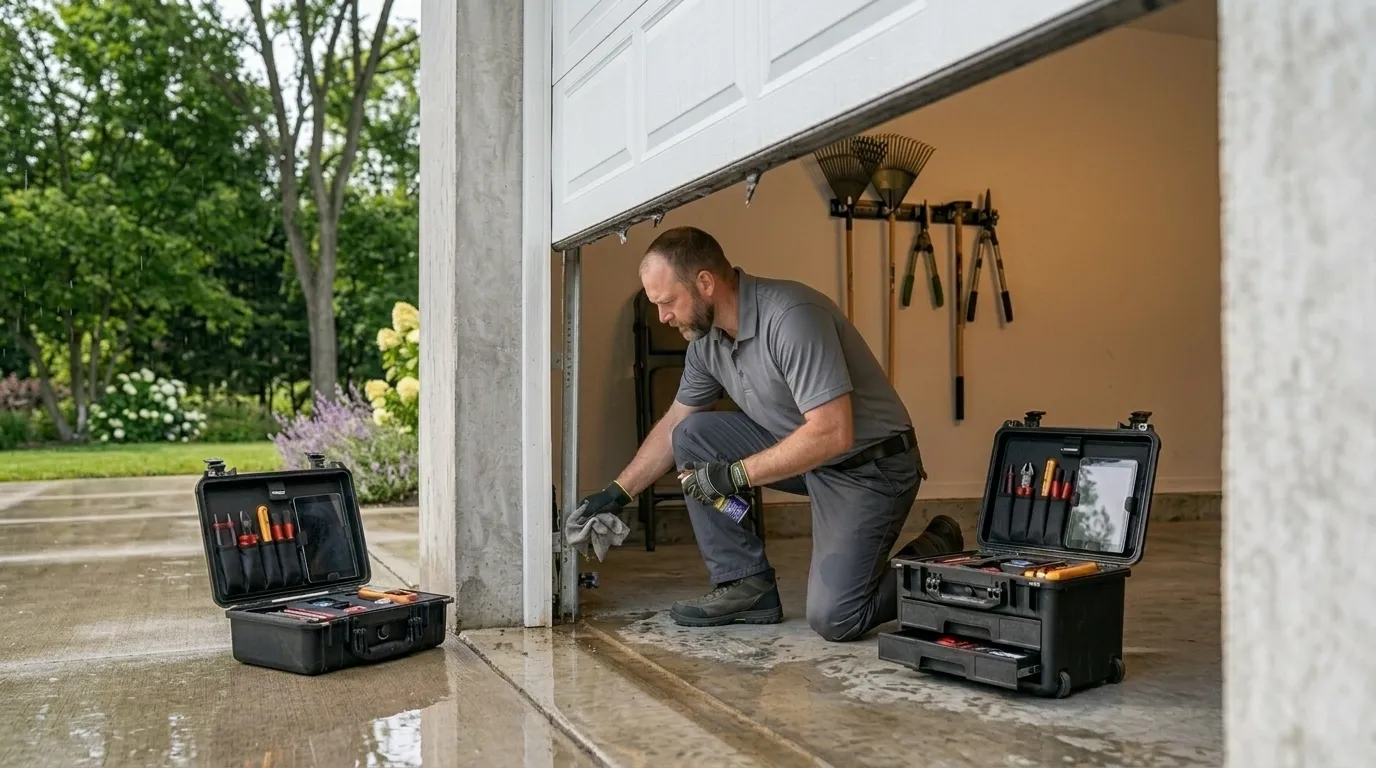
Call if a roller has actually left the track, even partway - trying to force the door back down on a jumped roller usually bends the track further and can drop the door on someone. Call if you hear a bang followed by the door sitting crooked; that's often a cable or a spring letting go at the same moment the track gave, and those two problems get expensive fast when they're handled separately instead of together.
Call too if the misalignment is on a door original to a house built in that 1960s-70s window and nobody's replaced the track hardware since - at that age, the bracket holes themselves are often stripped out, not just loose, and no amount of tightening holds for long. That's usually a hardware swap, not a repair.
One honest limit here: if the track is bent in more than one place, or the door panel itself is bowed from where it hit the track, replacing the door is usually cheaper over time than rebuilding a track that's already been forced twice. We'll tell you straight when that's the case instead of billing for a patch that won't hold through next winter.
What Local Conditions Do
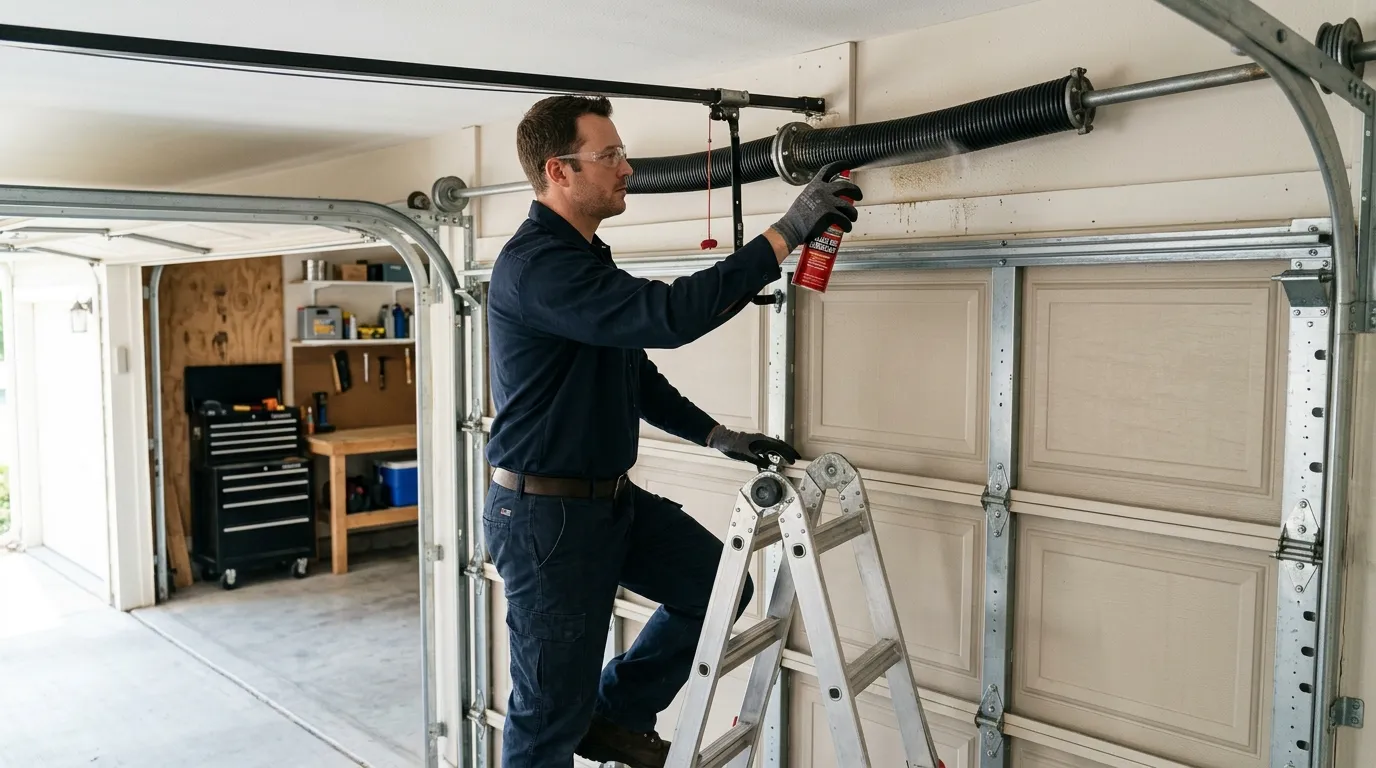
A severe cold climate does two things to a garage door track that a mild one doesn't. First, the steel rail itself contracts enough in deep cold to close tolerances that were fine in summer - a track that had an eighth inch of play in July can be tight enough in January to catch a roller edge. Second, the lubricant in the roller bearings thickens in the cold, so a roller that's already riding slightly off-center drags instead of rolling, and dragging is what pulls a bracket loose faster than smooth rolling ever would.
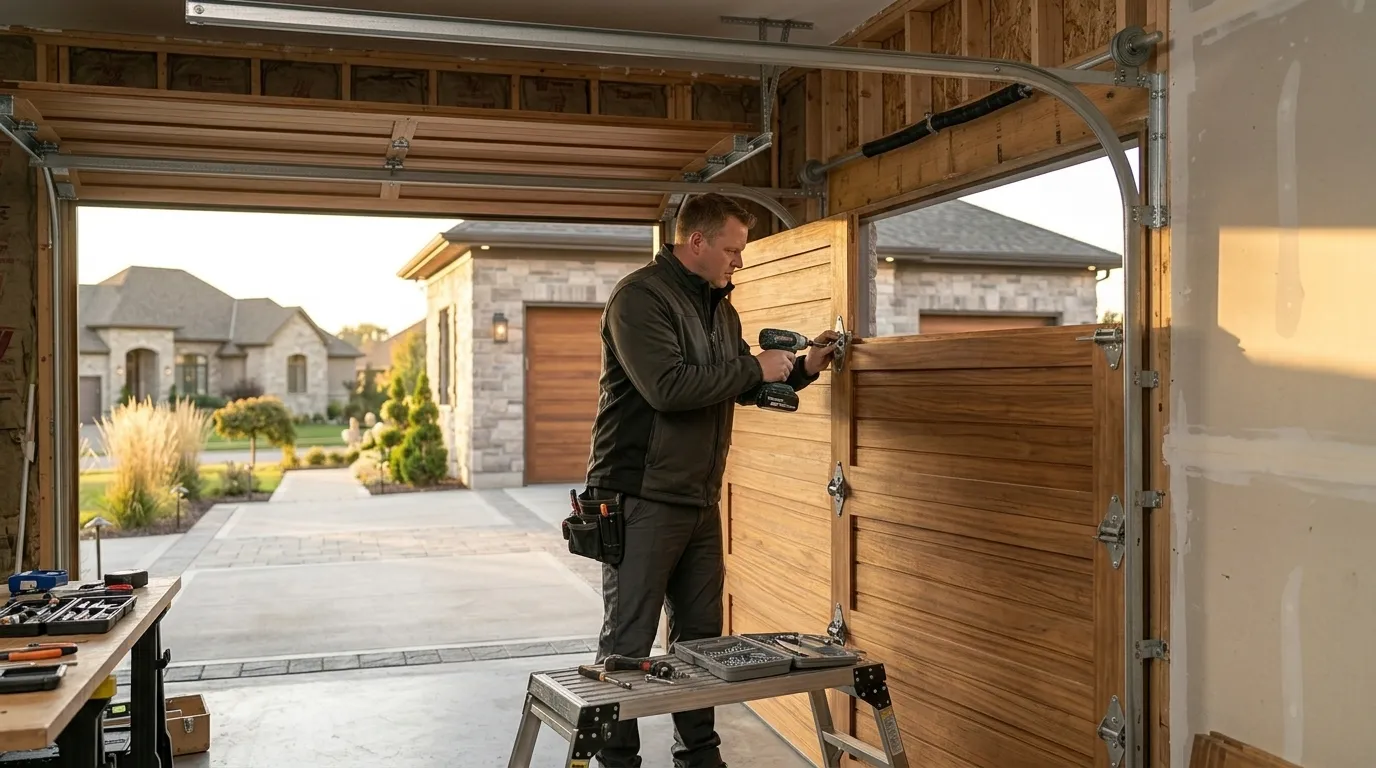
On houses from the 1960s and 70s stock that makes up most of this area, the original track brackets were sized for lighter doors than a lot of homeowners have upgraded to since. A heavier insulated door on old brackets, run through a full Northeast Ohio winter, is a combination that puts more strain on those original fasteners than they were built to carry. None of that is a defect in the door - it's just what sixty-year-old hardware does under a modern door and a real winter.
How it works
From “it’s stuck” to “it’s fixed”
01
Tell us what’s wrong
Describe the symptom - won’t open, loud bang, opener runs but the door won’t move.
02
On-site diagnosis
A technician tests the door under power and by hand and finds what actually failed.
03
Clear, up-front plan
You get the fix that’s needed and what drives the cost - before any work starts.
04
Repaired & tested
The repair is done, the door is set true and tested, and the work area left clean.
Serving Strongsville, OH - tell us what your door’s doing and we’ll take it from there.
Why did my garage door suddenly jump off the track this morning?
Cold snaps are the usual trigger. Steel track contracts in severe cold, and if a bracket was already a little loose from age, the tightened tolerance is enough to catch a roller edge and pop it out. It rarely happens gradually on the day itself - the looseness built up for weeks before the cold finished the job.
Can I just tighten the track bolts myself?
If the roller hasn't jumped and the track isn't bent, yes - snug bolts are a homeowner fix. If a roller has left the track or the rail is visibly bowed, don't force it closed yourself; forcing a jumped roller back in often bends the track further.
Is a bent track always a full door replacement?
No. A single clean bend from a bumped car is usually a track swap on its own. It's a bent track in more than one spot, or a track bent along with a bowed panel, where replacing the whole door usually ends up cheaper than chasing repeated repairs.
Does the age of my house matter for this kind of repair?
It does. Houses built in the 1960s and 70s original track hardware sized for lighter doors than many homeowners run today. If nobody's swapped that hardware since, stripped bracket holes are common, and tightening alone won't hold.
Ready to get your garage door sorted?
Tell us what it’s doing and where you are in Strongsville - we’ll take it from there.