What We Check First on a Strongsville Service Call
A look at what a technician checks first on a Strongsville garage door call, based on the area's 1960s-70s housing stock and cold-climate wear patterns.
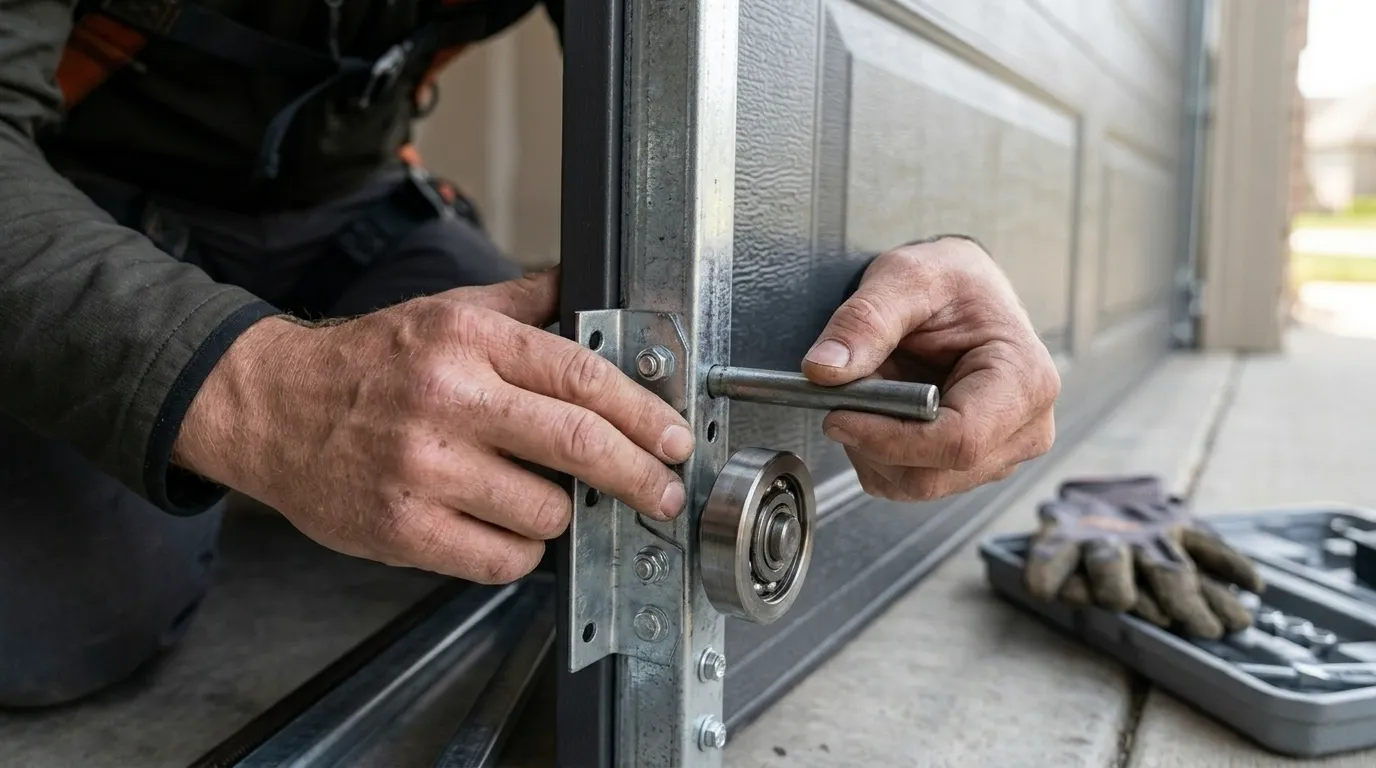
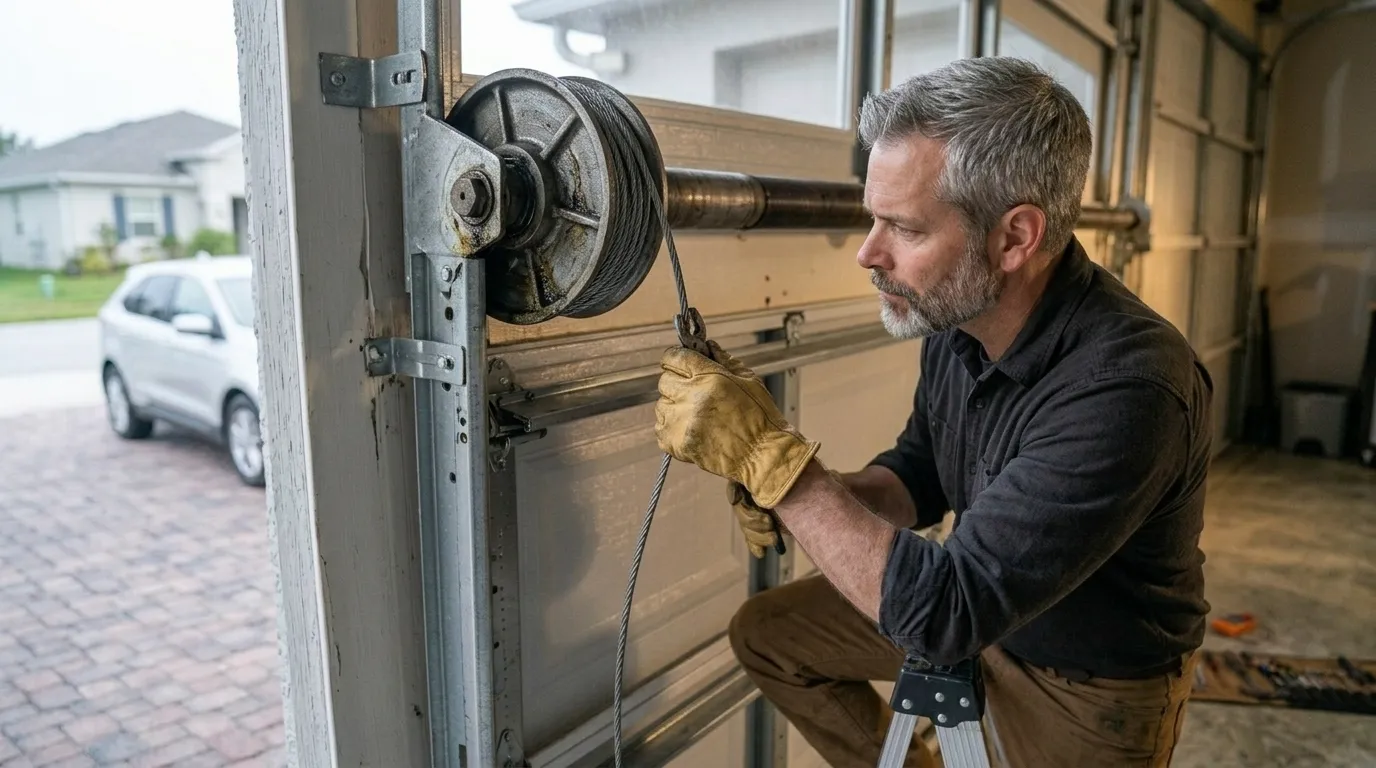
Most of the houses we get called to in this part of Ohio went up between 1938 and 2002, with the bulk of that stock clustered in the 1960s and 70s. That matters more than people expect. A door and opener installed when a house was built in 1967 has usually been through two or three replacement cycles by now, but the track alignment, header clearance, and even the electrical run to the opener were often set up to specs that don't match what gets installed today. So the first thing a tech does on an older Strongsville-area house isn't look at the door - it's look at what the door is hanging from. Track brackets that were fine for a lightweight 1970s steel door can be marginal for a heavier insulated door someone bolted on later. We check header clearance, jamb squareness, and whether the framing has shifted enough over 50-plus years to throw the whole opening out of plumb before we ever touch a spring or cable.
Across the wider service area - Middleburg Heights, North Royalton, Berea, and the other towns within a few miles - that same build era shows up again and again. It's not a one-house problem, it's a stock-wide one.
Doing Nothing For Now
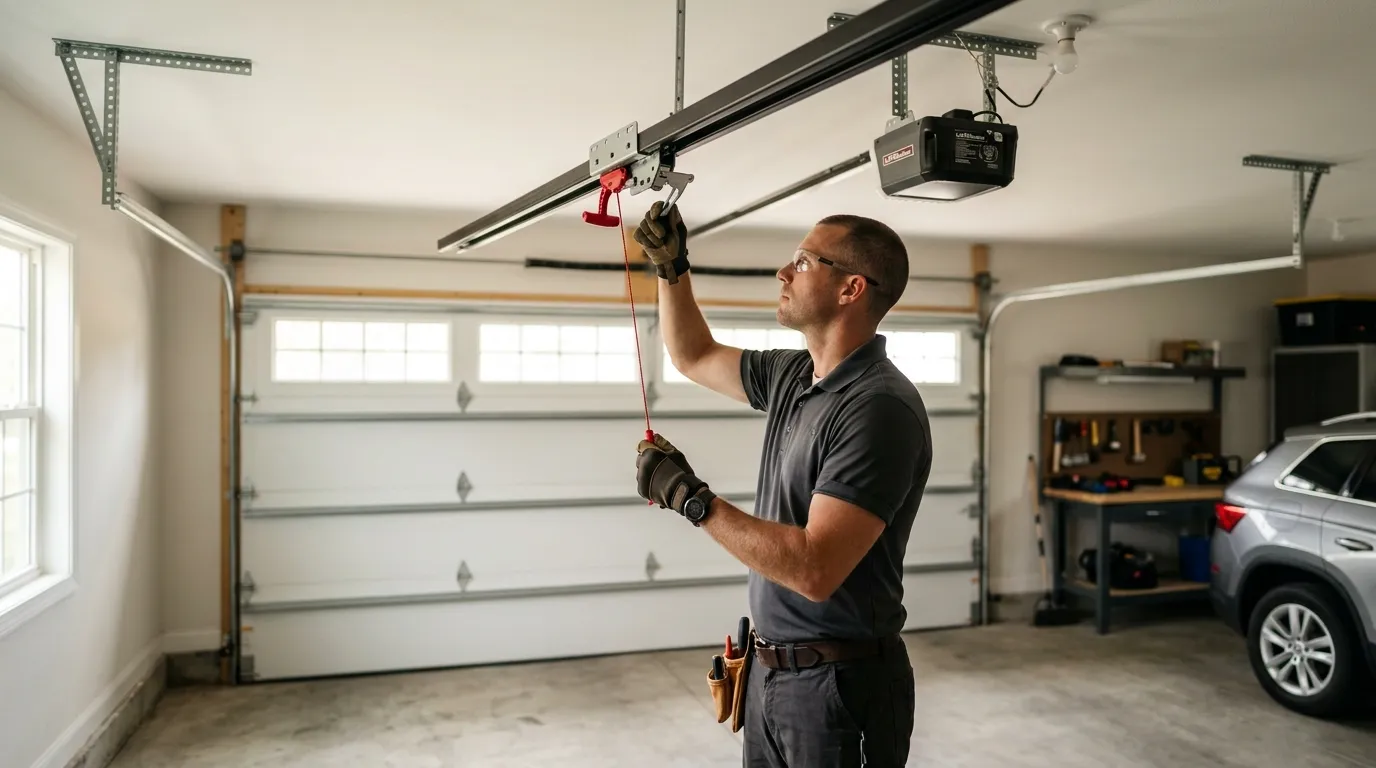
Not every noise or stiff spot means you need a call today. If a door from that 1960s-70s era is opening and closing on its own weight without the opener straining, and the springs aren't visibly stretched or gapped, you can often wait. Lubricating rollers and hinges yourself, checking that the auto-reverse still trips on contact, and watching for a slow drift in balance are reasonable things to do on your own before spending money on a service visit.
Where we tell people to hold off: cosmetic panel dents, minor track noise that doesn't affect travel, and weatherstrip wear that isn't letting in daylight yet. Given this area's cold band, weatherstrip failure eventually matters a lot - but a slightly worn seal in October isn't an emergency in September. The honest limitation here: we can't tell you over the phone whether your specific setup is fine to leave alone. A tech has to see the spring wind, the cable fray pattern, and the header condition in person before that call is safe to make.
When to Call Someone
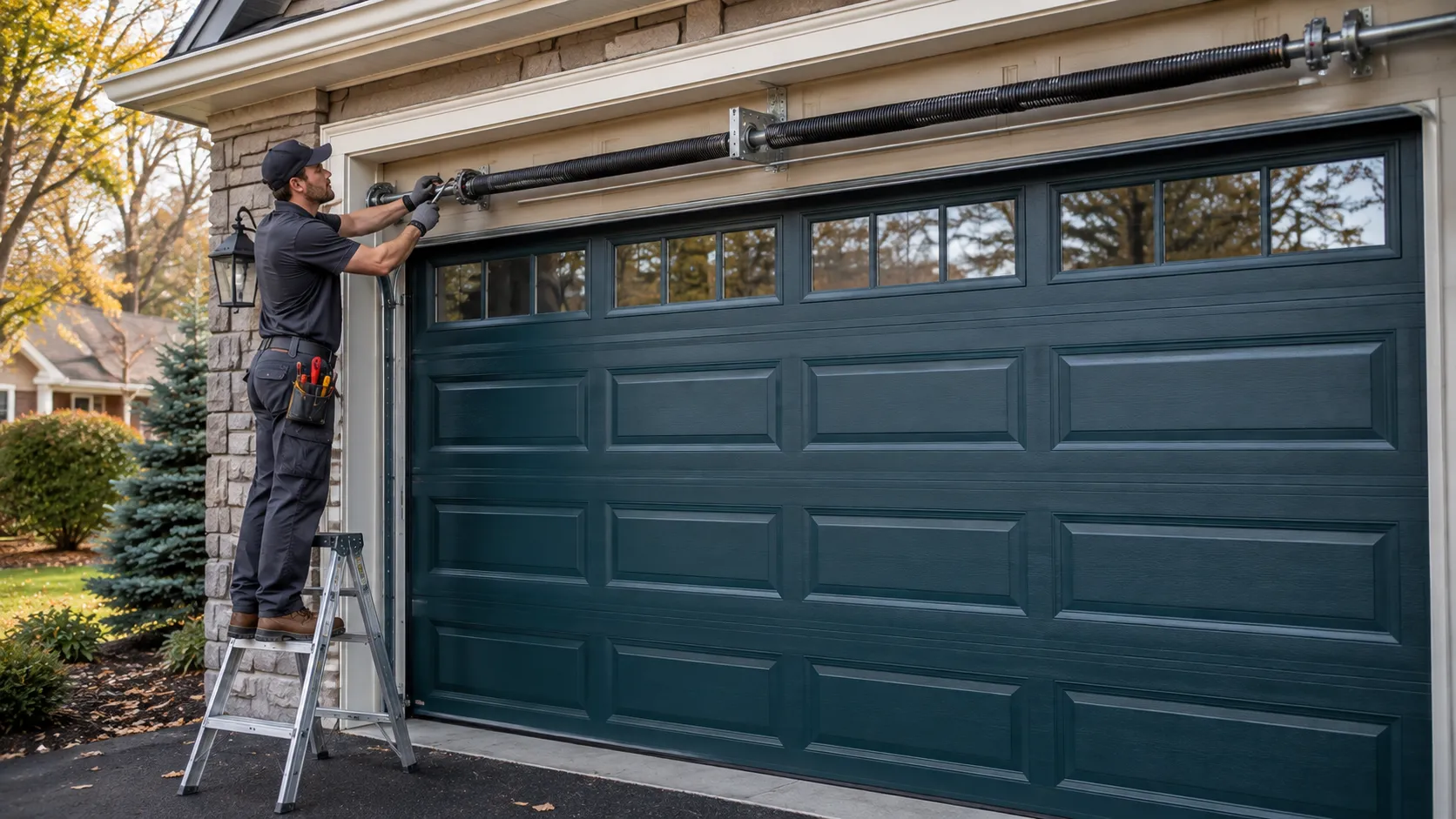
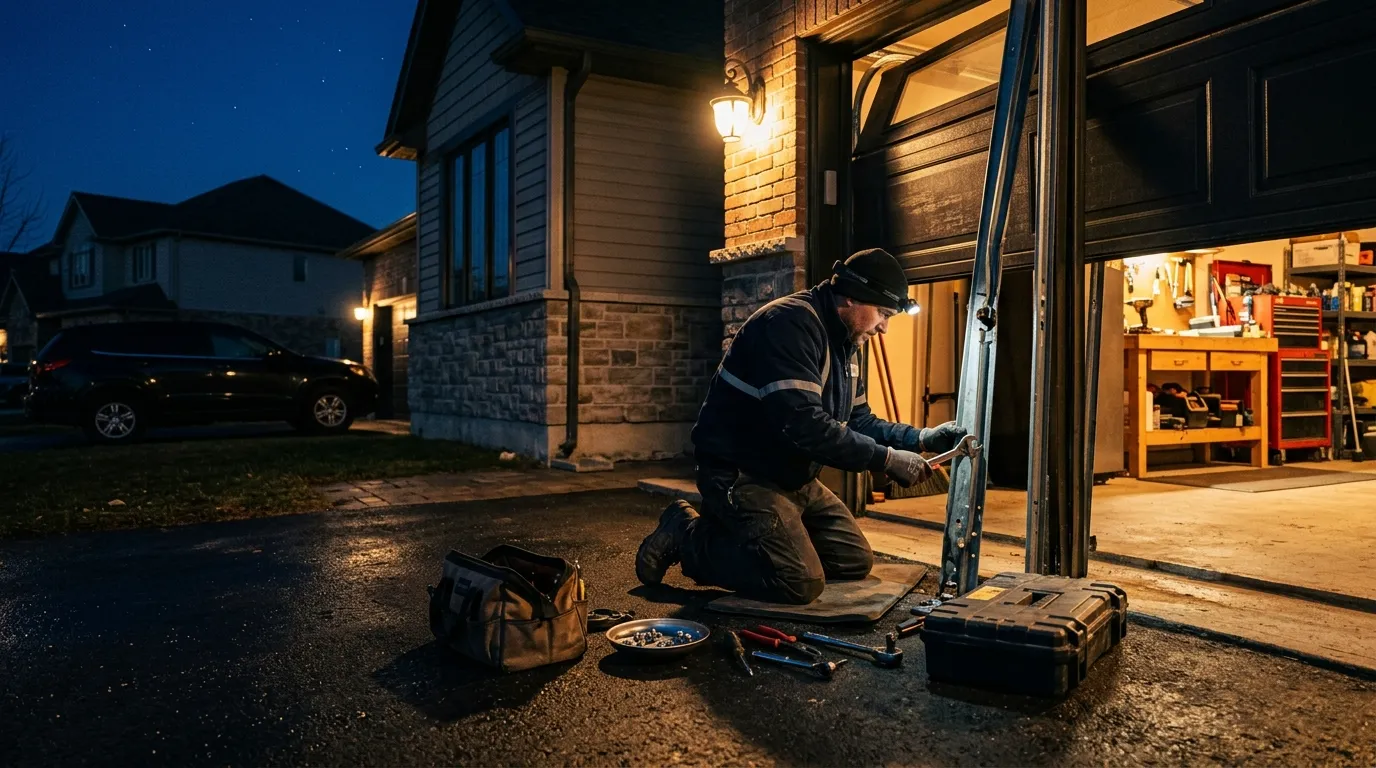
The clock speeds up once temperatures start dropping into the range this area sees through winter. Cold-severe climate conditions stiffen lubricant, shrink metal tolerances slightly, and make torsion springs that were already fatigued far more likely to fail on a cold morning rather than a mild one. If a door built to 1960s-70s hardware standards starts binding, reversing early, or making a hard bang on lift, that's the moment to call rather than wait for spring.
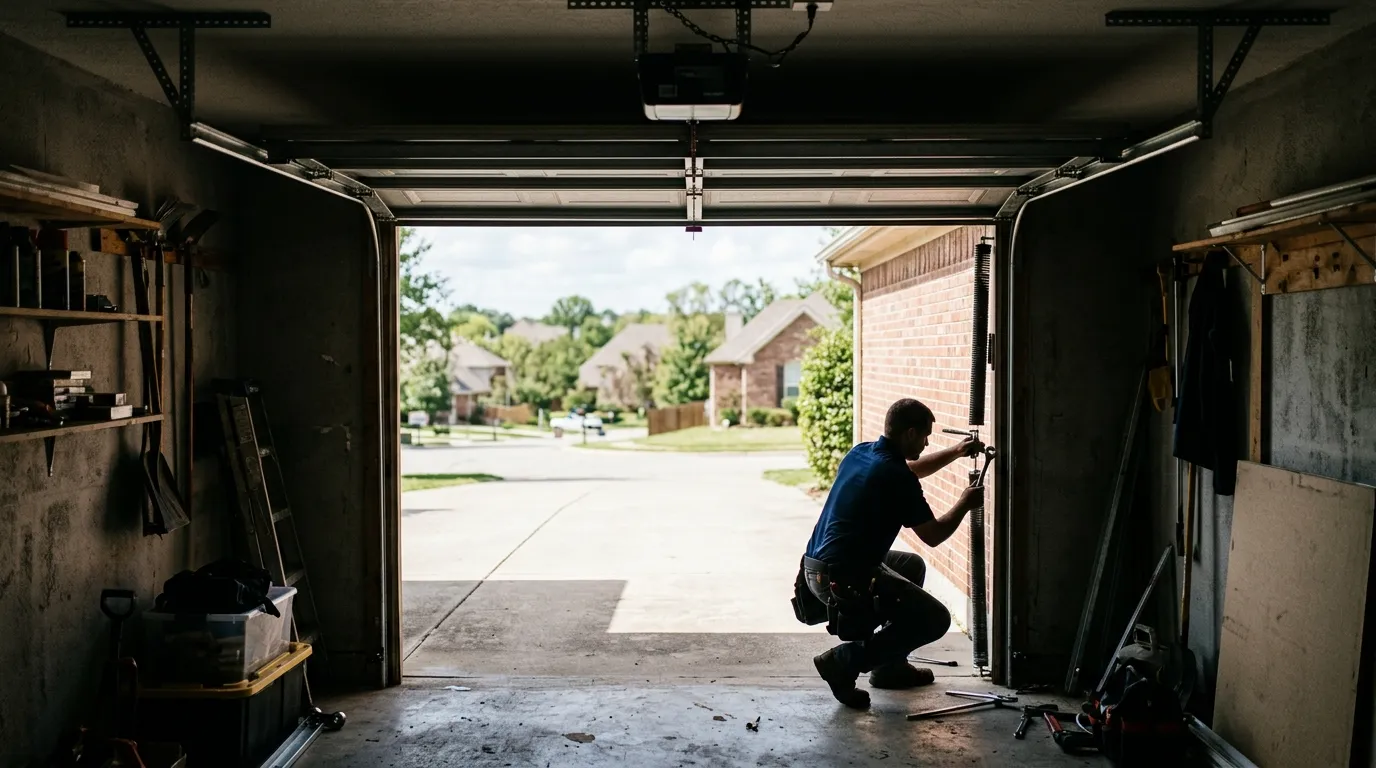
We also tell owners to call sooner rather than later if they've got a two-car door with a single spring setup, which was common on houses from that build era - one spring failure on a double door under load is a bigger, sometimes more dangerous job than the same failure on a single door. Given the median build year around 1967 in this area, a lot of doors are carrying original or first-replacement hardware that's simply aged out, independent of how well it's been maintained.
What Local Conditions Do
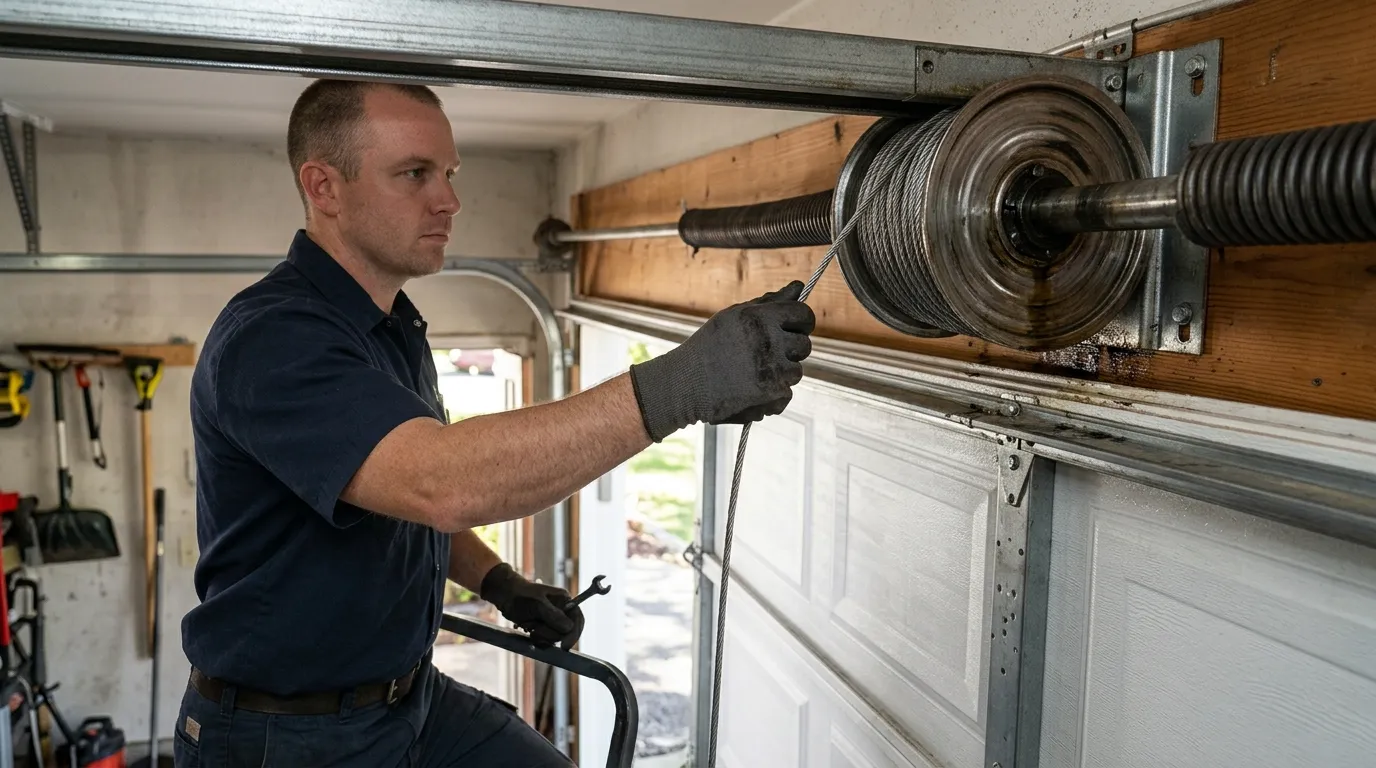
Cold-severe winters do specific, predictable damage to garage doors here. Nylon rollers get brittle and crack. Torsion spring steel loses a bit of flex tolerance in deep cold, so a spring that's been fine for years can snap on the first hard freeze rather than gradually wearing out. Weatherstrip at the bottom of the door hardens and stops sealing, which lets cold air into the garage and, on attached garages common to this housing stock, that cold air load reaches the house side of the wall.
We check bottom seal condition, roller material, and spring wind tension differently in November than we do in June, because the failure mode changes with the season. On a house from the 1938-2002 build range, especially anything on original or first-generation hardware, that's the difference between catching a spring before it lets go and getting the after-hours call when it already has.
How it works
From “it’s stuck” to “it’s fixed”
01
Tell us what’s wrong
Describe the symptom - won’t open, loud bang, opener runs but the door won’t move.
02
On-site diagnosis
A technician tests the door under power and by hand and finds what actually failed.
03
Clear, up-front plan
You get the fix that’s needed and what drives the cost - before any work starts.
04
Repaired & tested
The repair is done, the door is set true and tested, and the work area left clean.
Serving Strongsville, OH - tell us what your door’s doing and we’ll take it from there.
My door is original to a 1960s house in Strongsville. Should I just replace it instead of repairing it?
Depends what's failing. If it's a spring or a couple of rollers, repair usually makes sense. If the track, header, or opener mounting has shifted after 50-plus years, repeated repairs can cost more over time than one proper replacement. A tech needs to see the hardware to give you a real answer.
Why did my spring break in the cold instead of just wearing out slowly?
Torsion spring steel loses flex tolerance in cold-severe conditions. A spring that's been fatigued for a while can hold on through mild weather and then snap on the first hard freeze, because the metal has less give left when it's cold.
Is it normal for houses in this area to still have original garage door hardware?
Given the median build year around 1967 for this housing stock, yes - a lot of doors are running on original or first-replacement hardware. That's not automatically a problem, but it means the header, track brackets, and framing deserve a look, not just the door panel.
Ready to get your garage door sorted?
Tell us what it’s doing and where you are in Strongsville - we’ll take it from there.