Is Your Strongsville Garage Door Worth Repairing, or Time for New?
Strongsville homes built 1938-2002 often run original torsion hardware. Here's how to tell if an older door is worth fixing before Ohio's cold winters hit.
Most of the housing stock in this part of Ohio went up between 1938 and 2002, with the median build year landing around 1967. That puts a lot of doors in the 1960s and 70s bracket - the era of steel one-piece and early sectional doors on side-mounted torsion hardware. If your house falls in that window, there's a decent chance the door, the track, or at least the spring assembly is original or close to it.
That matters because parts from that era aren't always what's on the shelf today. Torsion tube sizes, drum styles, and even the panel width on some of those old sectional doors don't match current stock hardware. A repair that looks routine can turn into a hunt for a compatible part, or a decision to replace the whole assembly instead of patching one piece.
Before you call anyone, it helps to know roughly when your house was built and whether the door has been touched since. A door replaced in the last fifteen years is a different conversation than one that's never been swapped out. Age alone doesn't decide the call, but it narrows down what you're likely dealing with underneath the paint.
Doing Nothing For Now
A door that still opens and closes doesn't mean nothing's wrong. In a cold-climate area like this one, steel contracts in winter and grease inside bearings and hinges thickens up, which is why an old door that ran fine in September starts groaning or catching in January. That's not damage yet - it's a symptom of hardware that's been doing its job since the 60s or 70s without a lube service.
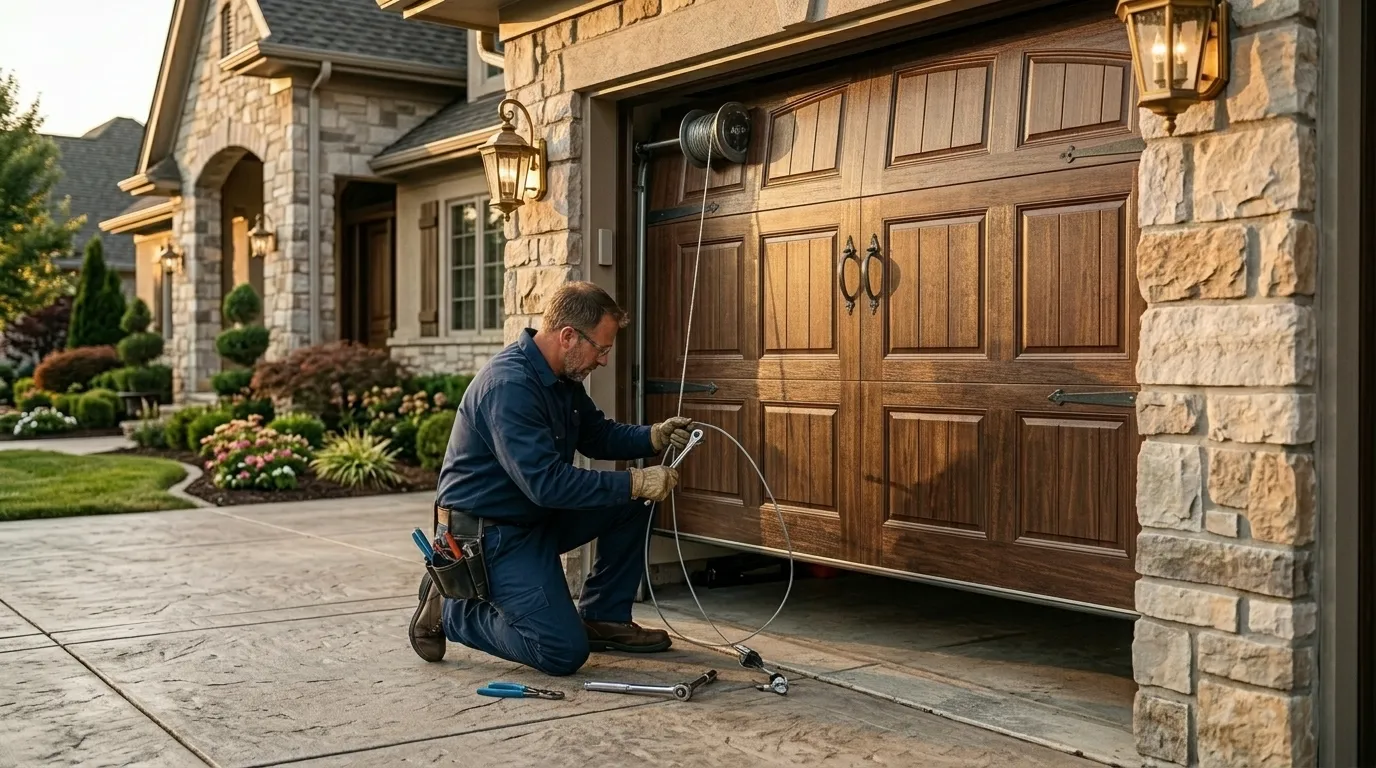
The real risk of waiting isn't usually the door itself, it's the spring. A torsion spring rated for a certain cycle count doesn't send a warning before it lets go, and springs installed decades ago on original hardware are well past any reasonable service life. Left alone, a door can run for years and then fail in one afternoon, usually with the door partway up.
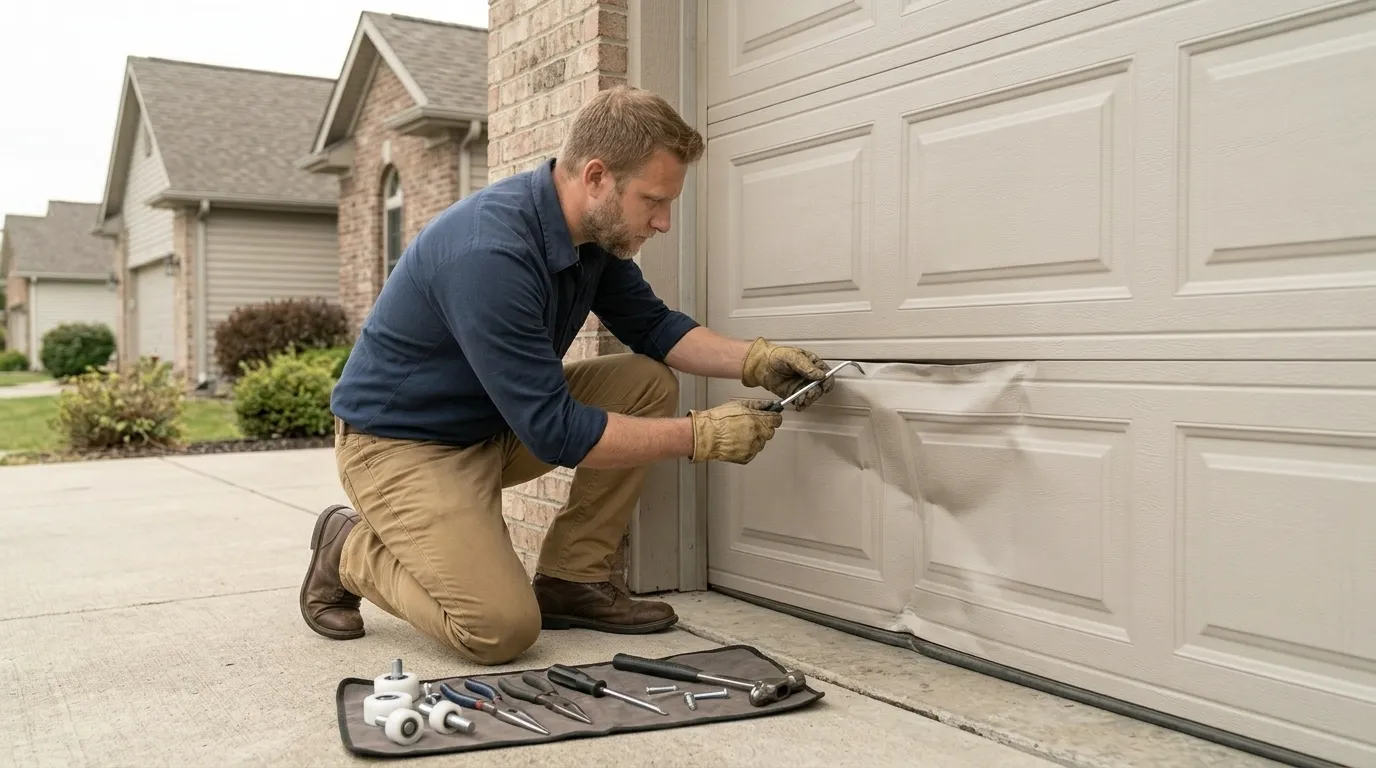
Honest limitation here: if the panels themselves are original steel with no insulation, no amount of maintenance turns them into a tight, quiet door. Lubing hinges and adjusting the track keeps a door running, but it doesn't fix a warped panel or a section that's rusted through at the bottom. At some point maintenance is just managing decline, not preventing it.
When to Call Someone
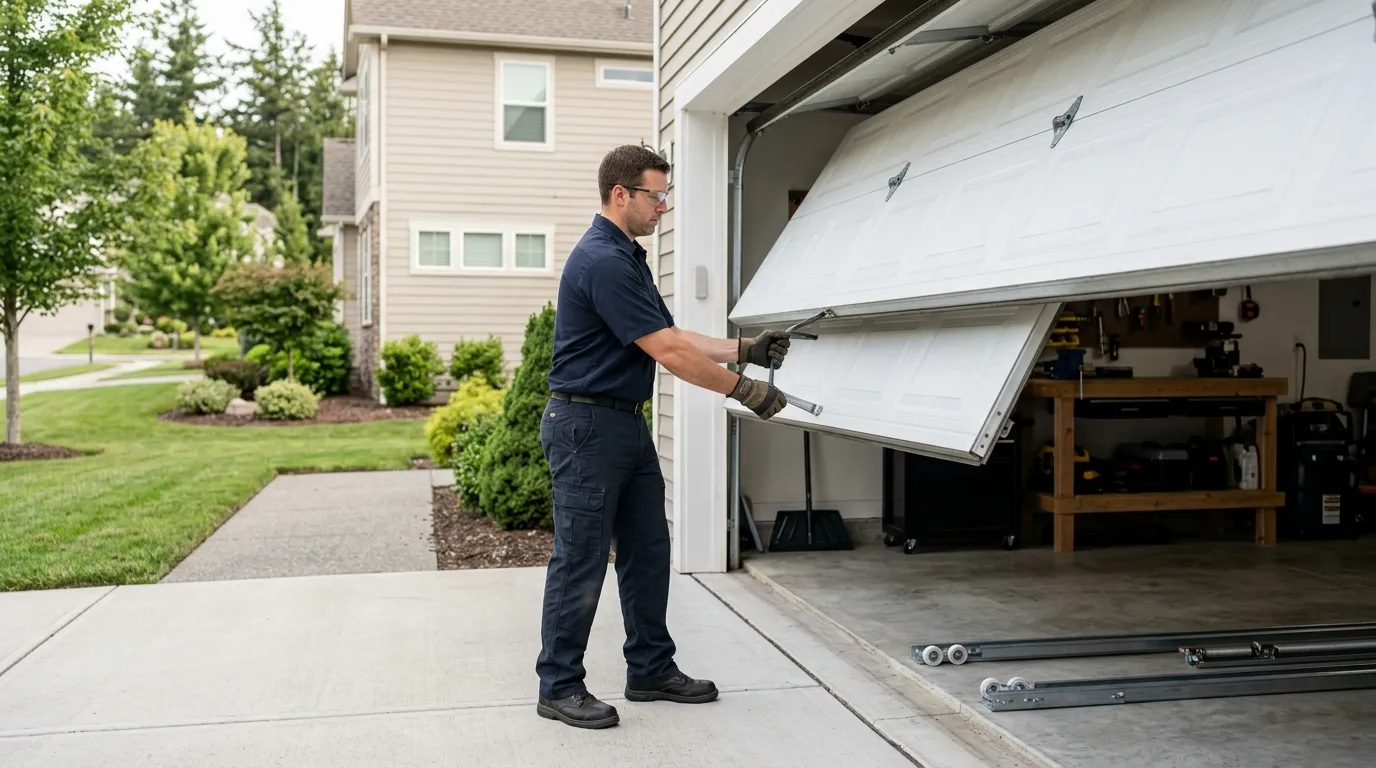
Call before the spring breaks, not after, if you can help it. A torsion spring on an original 1960s or 70s installation has usually seen more open-close cycles than it was built for, and a visible gap in the coil or a door that feels heavier than it used to are both signs it's near the end. That's worth a call regardless of how the rest of the door looks.
Same goes for rollers that have gone from steel to a mix of rust and flat spots, or a bottom panel that's soft to the touch from years of moisture at the slab line. Those are wear patterns specific to older doors in this climate, not cosmetic issues.
What's usually not worth a service call: a door that's merely loud but moving smoothly, or minor surface rust on hardware that still turns freely. Those can often wait for a scheduled visit rather than an emergency one. The line between routine and urgent mostly comes down to whether a spring or cable is involved - those don't give much warning, and everything else usually does.
What Local Conditions Do
This area sits in a cold-climate band with severe winter conditions, and that's the main thing working against an older door here. Steel torsion springs lose tension faster when they cycle through repeated freeze and thaw, and the grease packed into bearings when a door was installed in, say, 1968, has usually hardened into something closer to wax by now.
Wood-trim doors and jambs from that same era swell in humid stretches and then shrink and crack once the cold sets in, which is part of why a door that used to seal tight at the bottom now leaves daylight showing at one corner. None of this is unique to one house - it's a pattern across the older stock in Strongsville and the surrounding towns that share the same build era and weather.
What that means practically: a door here ages differently than the same door would in a milder climate, even if both were installed the same year. Hardware built for average use doesn't always hold up to decades of that freeze-thaw cycle, which is part of why age and local weather both belong in the same conversation when you're deciding whether to fix or replace.
How it works
From “it’s stuck” to “it’s fixed”
01
Tell us what’s wrong
Describe the symptom - won’t open, loud bang, opener runs but the door won’t move.
02
On-site diagnosis
A technician tests the door under power and by hand and finds what actually failed.
03
Clear, up-front plan
You get the fix that’s needed and what drives the cost - before any work starts.
04
Repaired & tested
The repair is done, the door is set true and tested, and the work area left clean.
Serving Strongsville, OH - tell us what your door’s doing and we’ll take it from there.
How do I know if my garage door is original to the house?
If your house was built between 1938 and 2002 and you've never had a service record or replacement invoice for the door, there's a good chance it's original or close to it. Look for a one-piece steel door, side-mounted torsion springs, or a nameplate with a manufacturer date - those details usually point to an older installation.
Is it worth replacing just the spring on an old door instead of the whole door?
Often yes, if the panels and track are still solid. A spring swap on original hardware is a contained job. It's not worth it if the panels are warped, rusted through, or the track is bent - at that point you're paying labor twice instead of once.
Why does my old garage door get louder and stiffer every winter?
Cold makes steel contract and old grease in the bearings and hinges thickens, so hardware that ran fine in fall starts to bind and groan once temperatures drop. It's a normal symptom of aging hardware in a severe winter climate, not necessarily a sign of imminent failure, but it's worth a lube and adjustment before it gets worse.
Should I fix or replace a door from the 1960s or 70s?
It depends on what's actually failing. A worn spring, dried-out rollers, or a stiff opener on an otherwise solid steel door are usually worth fixing. A warped panel, rusted-through bottom section, or track that's been bent from age usually means the repair costs more over time than starting with a new door.
Ready to get your garage door sorted?
Tell us what it’s doing and where you are in Strongsville - we’ll take it from there.