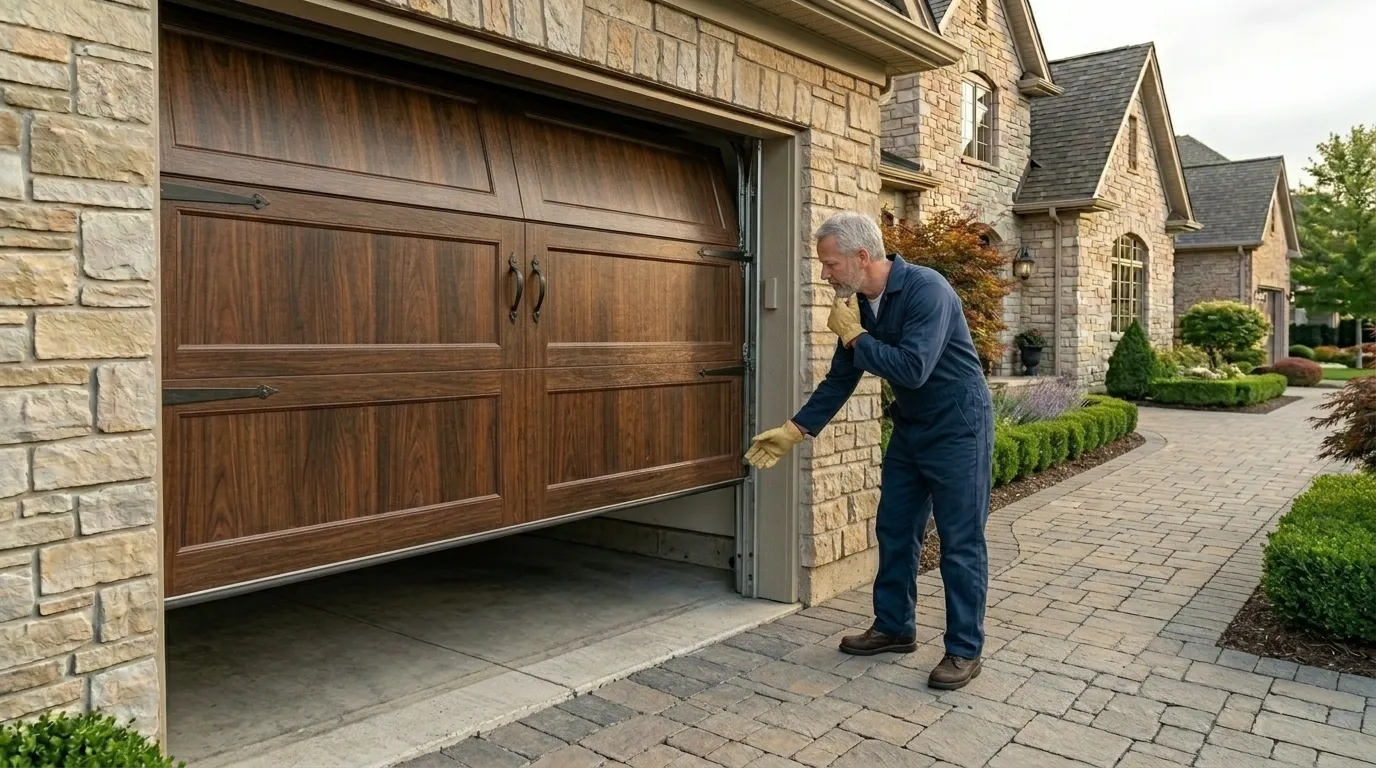
What That Noise From Your Garage Door Is Actually Telling You
Grinding, popping, or slamming door in Strongsville? Homes here run 1938-2002 with original hardware. Learn which noises mean call now and which can wait.
You hear something different from the garage door and you don't know if it's a five-minute fix or the start of a bigger job. In Strongsville that question has a specific answer, because the housing stock here isn't uniform new construction. Homes across the area were built between 1938 and 2002, with the median landing around 1967, and most of the 47 named sections of town carry that same 1960s-70s bones. That means a lot of original torsion hardware, older track brackets, and openers that have been swapped once or twice but sit on the same rail the house came with.
A noise on a door that age carries different odds than the same noise on a door installed last year. A grinding sound on a 1968 track is more likely a bent section or worn rollers that have finally worn through their bearing. A popping sound on a spring that's been carrying tension since the Ford administration is a different bet than a popping sound on a five-year-old spring. Age changes what's probable, not what's possible - and that's the lens worth using before you decide whether to call or wait.
This isn't a scare tactic. Plenty of noises are cosmetic and can sit on your list for a month. The point of this page is to help you sort which is which, using what's actually common in houses like the ones on your street.
Doing Nothing For Now
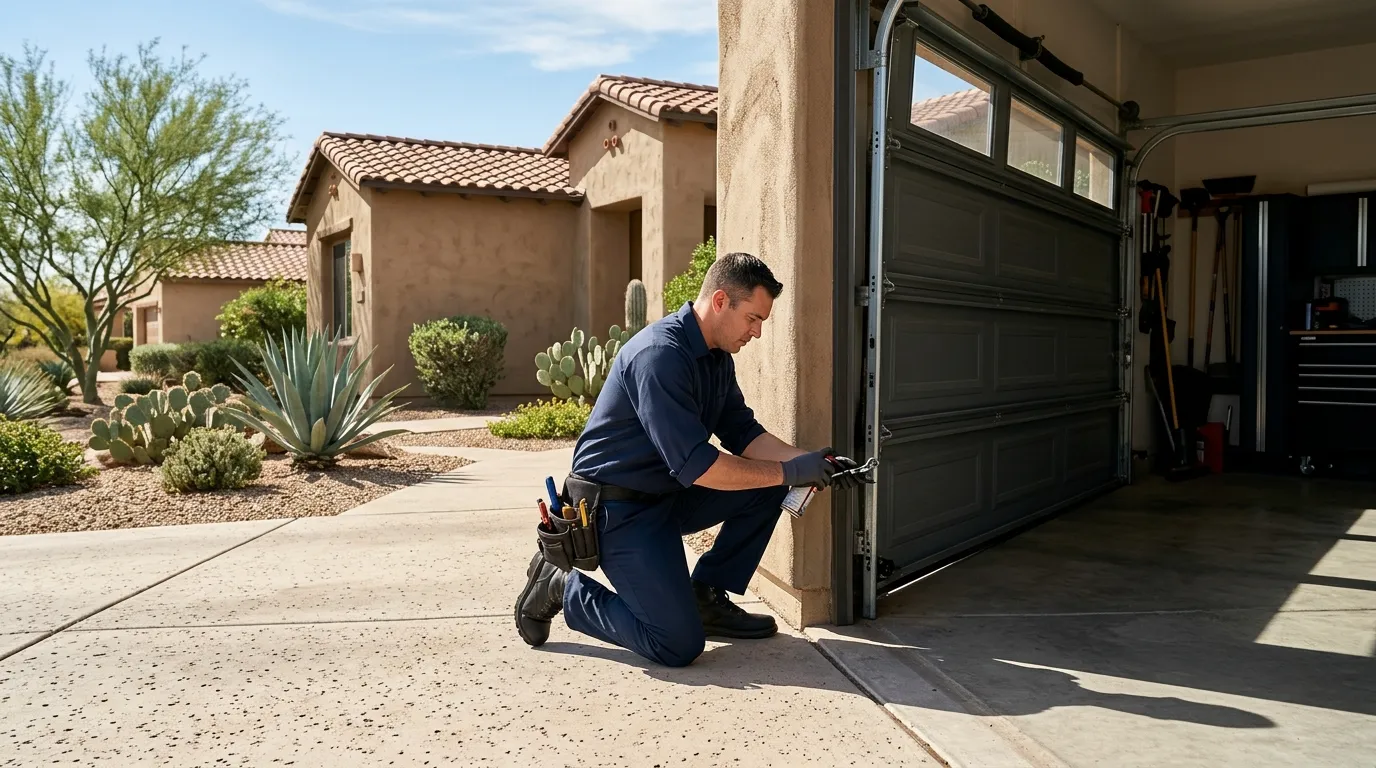
Some noises are fine to live with for a while. A single squeak on the up-stroke, especially in cold weather, is often just dry rollers or hinges - lubricate the rollers, hinges, and track (not the springs) with a garage-door-specific lube, not WD-40, and see if it quiets down. Strongsville sits in a severe cold climate band, and grease thickens when temperatures drop, so a door that runs smooth in July and stiff in January is behaving normally for the region, not failing.
A light rattle from the opener rail on an older bracket, if the door still opens and closes level, is usually a loose bolt, not a structural issue - snug it up when you get to it. Doors on this vintage of house (1938-2002 stock, median 1967) often have accumulated a few of these small looseness issues over decades of use, and none of them individually mean the door is about to fail.
The honest limitation here: if you're not sure whether a noise is cosmetic or not, lubrication and a visual check are the safe first moves, but they're not a diagnosis. If the noise doesn't change after that, or it's paired with any of the symptoms in the next section, stop guessing and get it looked at.
When to Call Someone
Some noises are not a wait-and-see situation. A loud bang or a sudden loss of tension - the door feels heavy, won't stay open, or drops fast - almost always means a broken torsion spring, and that's dangerous to touch yourself regardless of the door's age. Call for that one the same day.
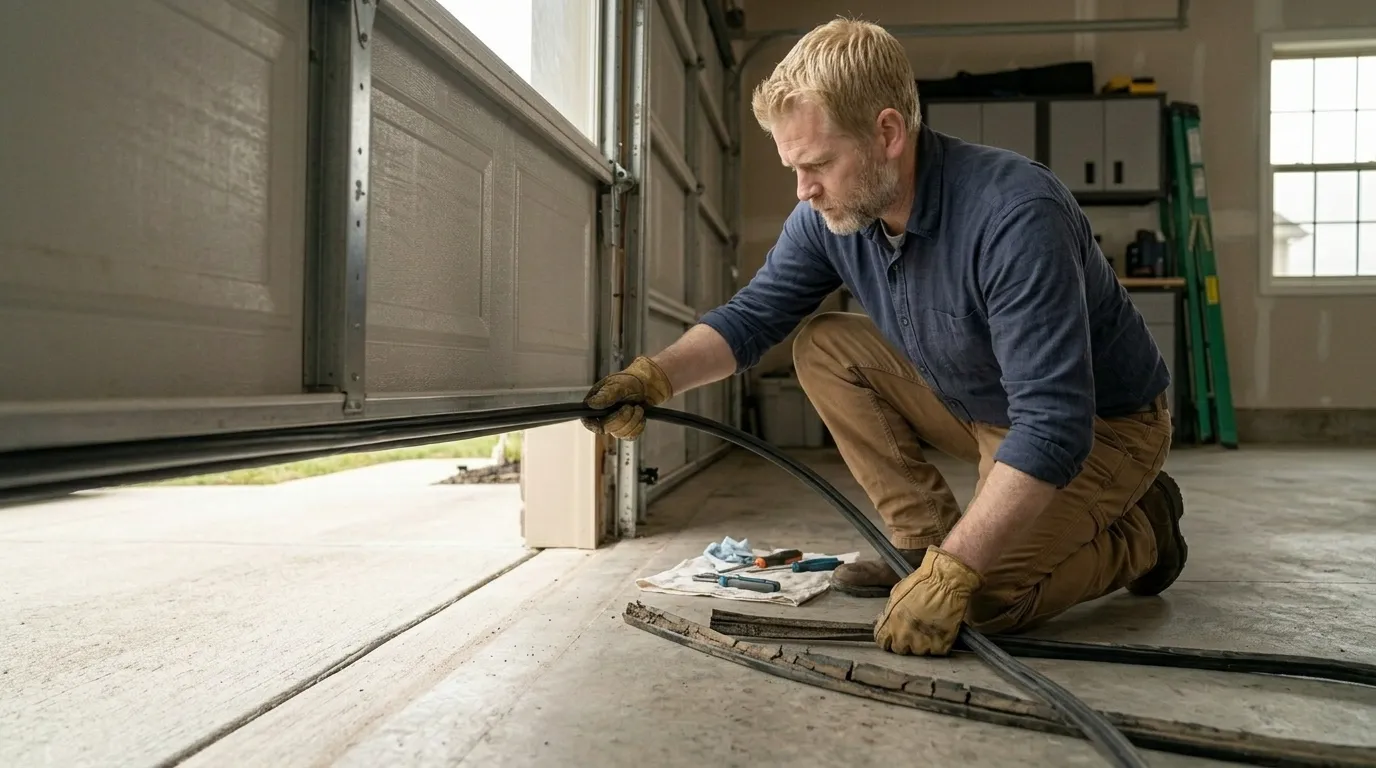
A grinding or scraping sound that gets louder over a week, on a house built in the 1960s-70s range like most of this area, is often a roller finally failing after decades of service, or a track bracket that's worked loose from the framing over that many years of expansion and contraction through cold winters. Left alone, a failing roller can jump the track and take the door off-square, which turns a $100 part into a full track replacement.
A repeated clicking or clunking from the opener unit itself, especially paired with the door hesitating mid-travel, points to a worn drive gear or a chain that's stretched past adjustment - common on openers that have been in service long enough to have outlived at least one motor. Any of these on an older door is worth a call rather than a wait, because the failure mode (spring under tension, track coming loose, opener losing control of a heavy door) has real risk attached, not just inconvenience.
What Local Conditions Do
Cold matters more here than in a mild climate, and Strongsville sits squarely in a severe cold band. Steel contracts in the cold, torsion springs stiffen, and hardware that's already decades old (this area's housing runs 1938-2002, median 1967) has less flex left in it to absorb that seasonal swing. That's why a lot of the calls that come in during a cold stretch are doors that were making a small noise all fall and finally gave out once temperatures dropped hard enough to remove the last bit of slack in a tired spring or a loose bracket.
Houses across the area's 47 named sections mostly share that same 1960s-70s build era, which means original track hardware sized for openers and door weights that don't always match what's on the door now - a heavier insulated replacement door on old brackets can produce a new noise even though nothing broke, simply because the load changed. If your door's noise showed up right after a door or opener swap, that's worth mentioning when you call, since it points the diagnosis in a different direction than wear alone.
We don't do emergency roadside fixes on a door that's been forced or pried at - if a door's been muscled open past a jam, sometimes replacement is the more honest answer than another repair on top of it.
How it works
From “it’s stuck” to “it’s fixed”
01
Tell us what’s wrong
Describe the symptom - won’t open, loud bang, opener runs but the door won’t move.
02
On-site diagnosis
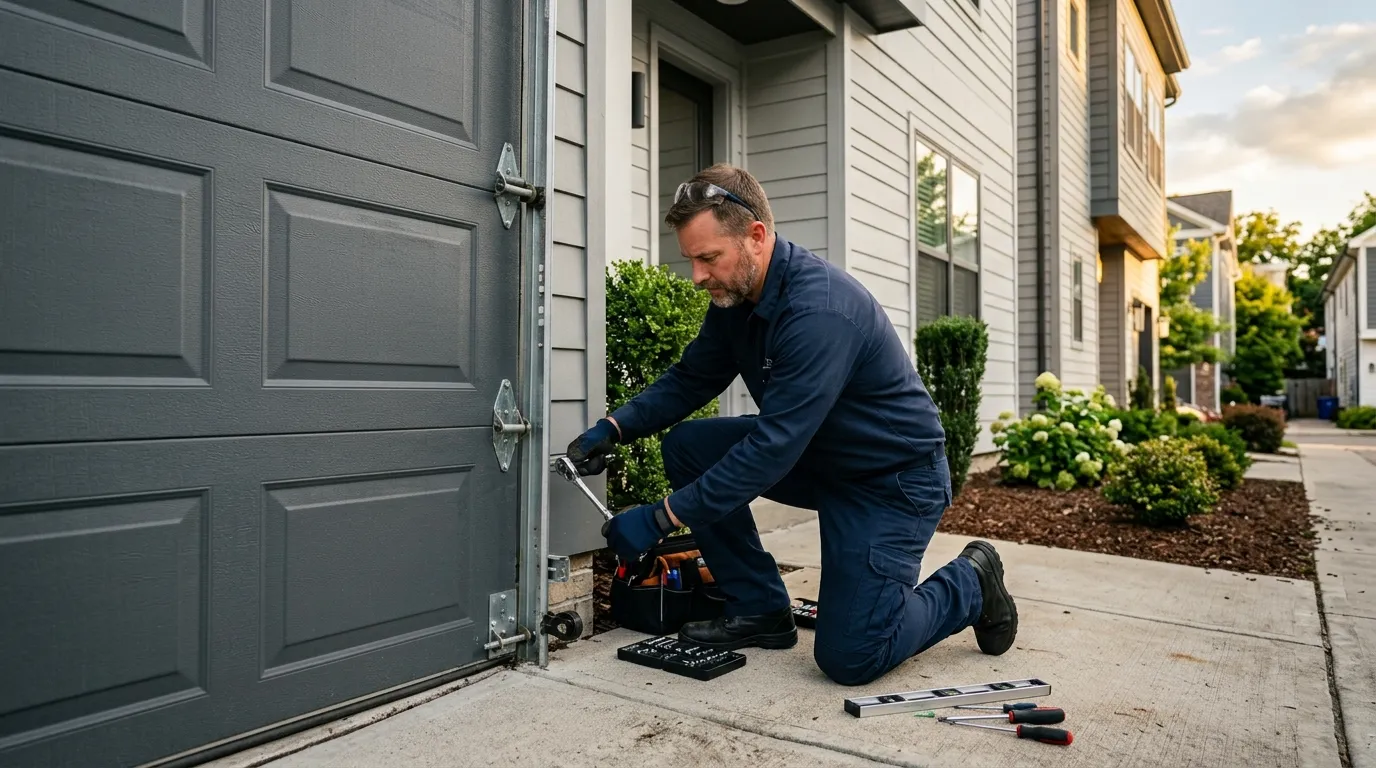
A technician tests the door under power and by hand and finds what actually failed.
03
Clear, up-front plan
You get the fix that’s needed and what drives the cost - before any work starts.
04
Repaired & tested
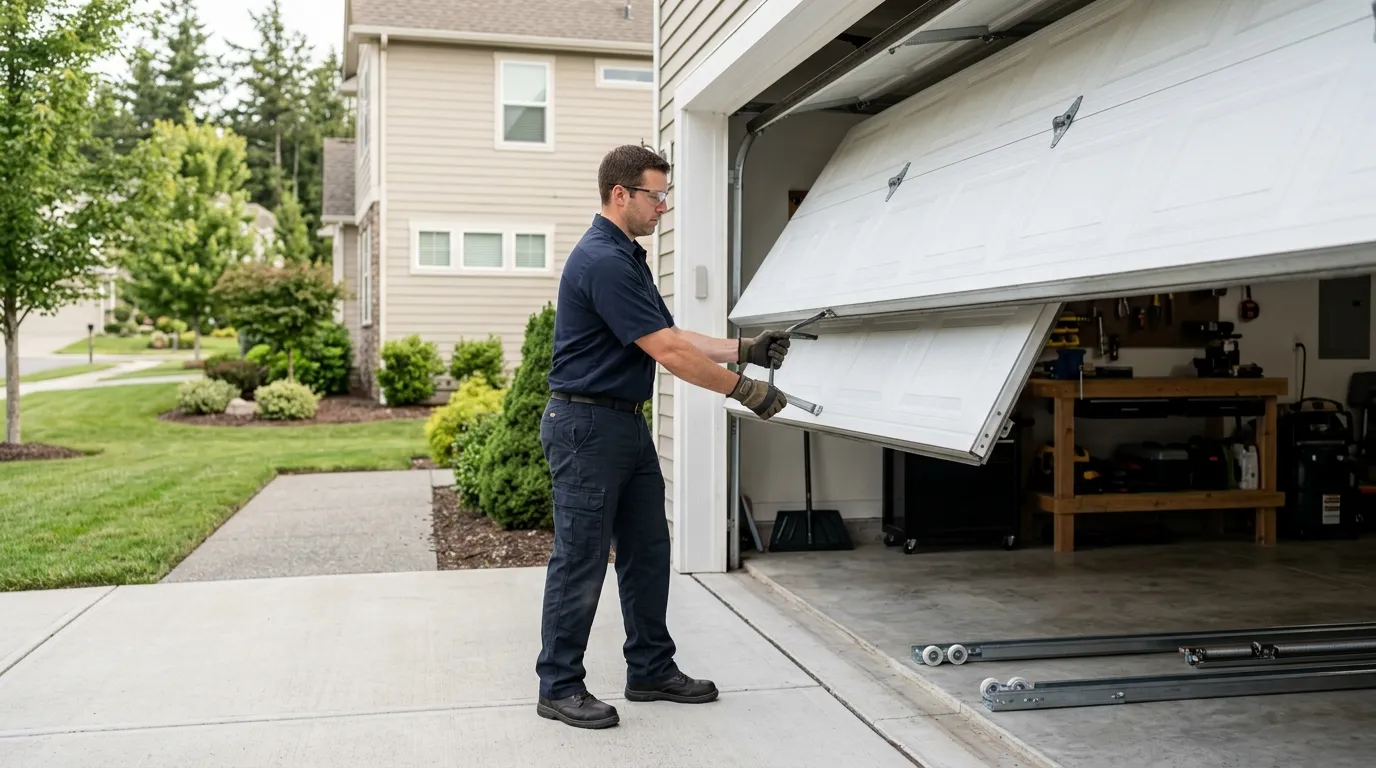
The repair is done, the door is set true and tested, and the work area left clean.
Serving Strongsville, OH - tell us what your door’s doing and we’ll take it from there.
Why does my garage door make more noise in winter?
Cold stiffens torsion springs and shrinks metal hardware slightly, which is more noticeable on the older brackets and track common in this area's 1960s-70s housing stock. A door that's quiet in summer and noisy in a hard cold stretch is usually just showing its age faster once the slack in an aging spring or bracket runs out.
Is a grinding noise always a broken spring?
No. A sudden bang and a heavy, unbalanced door usually mean a broken spring. A grinding or scraping sound that builds over days is more often a worn roller or a loose track bracket - both common on older doors in this area - and neither is an emergency, but both get worse if ignored.
My door is original to a house built in the 1960s. Should I worry about the noise?
Age alone isn't a reason to worry, but it does change the odds. Original hardware from that era has had decades of seasonal cold to work loose or wear down, so a new noise on a door that old is worth checking sooner than the same noise on a five-year-old door.
Ready to get your garage door sorted?
Tell us what it’s doing and where you are in Strongsville - we’ll take it from there.