Weather Seals and Draughts in Strongsville Garage Doors
Why draughty garage doors are common in Strongsville homes built 1938-2002, what happens if you ignore a bad seal through a cold winter, and when to call someone.
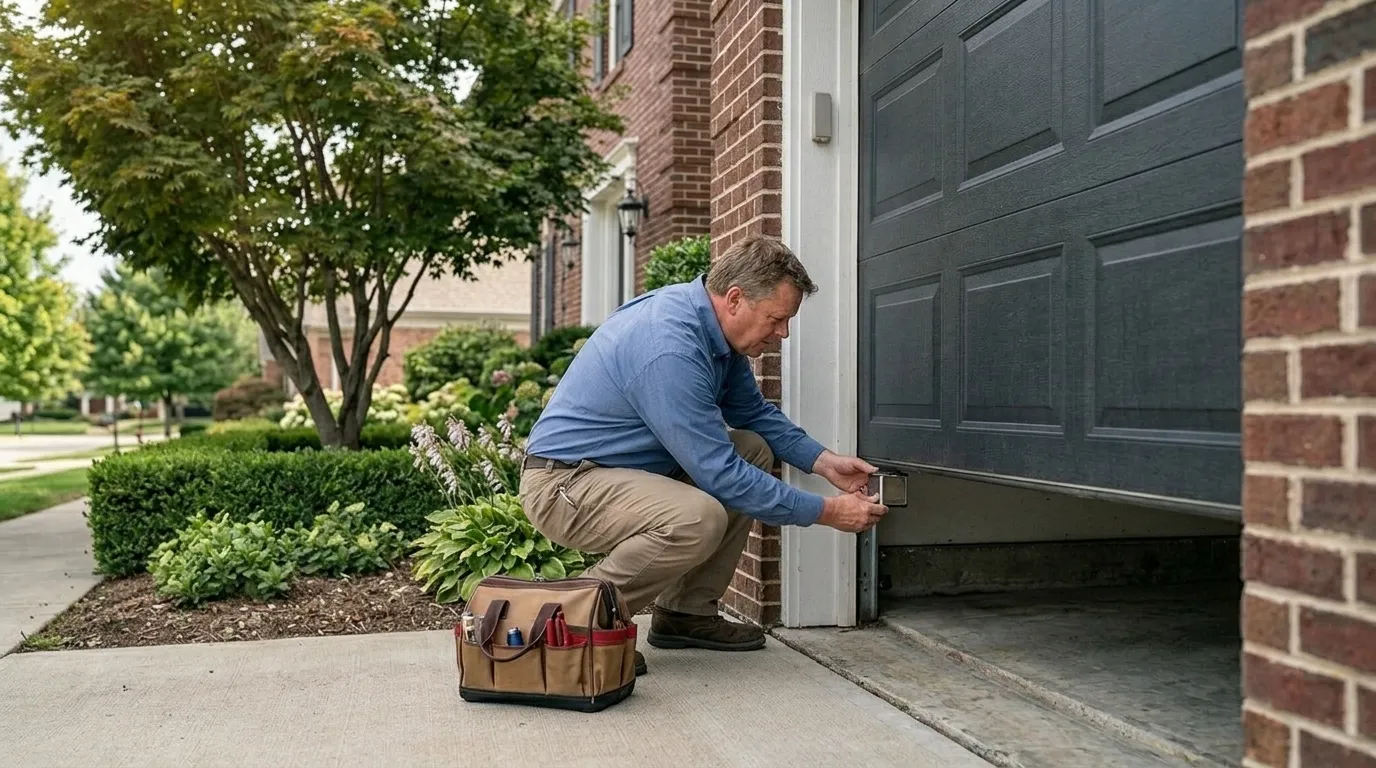
Most garages in Strongsville sit under houses built between 1938 and 2002, with the bulk of the stock going up in the 1960s and 70s. That matters for seals because the bottom astragal and side weatherstripping on a door installed during that build-out were never designed for the vinyl and rubber compounds we use now - they were often replaced piecemeal over the decades, which means a lot of doors in this area have a mismatched seal system: one style on the bottom, another where a prior owner patched the sides. Add in a climate that the federal data classes as cold and severe, and you get a specific failure pattern here: seals that were fine in October go stiff and crack once temperatures drop hard, and a gap that's invisible in July becomes a visible line of daylight and cold air by January. If you've felt a draft along the floor of your garage on a windy winter morning, it's rarely one big gap - it's usually the bottom seal, one side seal, and a warped panel edge all losing a little ground at once. Given how much of Strongsville's housing dates to that mid-century wave, this isn't a rare complaint. It's close to the default condition for a door that hasn't been resealed in a decade.
Doing Nothing For Now
A worn seal on its own isn't an emergency, and I won't tell you it is. If the draft is minor and the door still opens, closes, and locks the way it should, you can live with it through most of a season without damage to the door itself. What you're paying for is heat loss into the garage and, depending on how your house is laid out, into whatever's on the other side of that wall. In a cold-severe climate like this one, an unsealed gap along a 1960s or 70s-era door frame lets in enough air movement to keep a garage several degrees colder than a sealed one, which matters if you keep a freezer out there, if plumbing runs along that wall, or if a room above the garage feels chilly in January. None of that is urgent. It's a slow cost, not a sudden one. The honest limitation here: a seal replacement won't fix a door that's warped, racked, or hung on hardware that's shifted with the house's settling - common enough in homes from that era - and if that's what's actually going on, new weatherstripping is a band-aid, not a fix.
When to Call Someone
Call when the draft comes with a second symptom, not just cold air. If the door drags along the seal instead of compressing it evenly, that's a track or roller alignment issue, and a new seal will just wear unevenly again within a season. If you can see daylight in a straight, even line at the bottom but a wavy or gapped line at the sides, that often points to a panel that's warped from age and temperature swings - not unusual in doors from the 1960s-70s stock common across this area - and the seal isn't the real problem. If the garage smells damp near the base of the door after a thaw, water's getting past the seal and pooling, which in cold-severe conditions means freeze-thaw cycling right at the slab, and that's worth a look before it works on the concrete. A straightforward seal swap on an otherwise sound door is a small job. A door with alignment or panel issues wrapped up in a seal complaint is a bigger one, and it's worth knowing which you have before you spend money twice.
What Local Conditions Do
The cold-severe classification for this area isn't just a label - it means repeated freeze-thaw cycling on any seal material, and rubber and vinyl compounds harden and shrink slightly with each cycle. Over a winter, a seal that started snug in October can lose enough flex by February that it no longer follows the slab or the frame the way it did. Combine that with a housing stock where a meaningful share of doors were installed or last resealed decades ago, and you get seals that are past their working life well before they look obviously broken. This is also why a seal that seems fine on a mild 40-degree day can leak cold air on a 10-degree night - the material stiffens and pulls back from the frame exactly when you need it sealed tightest. None of this is specific to one house; it's a function of the climate this whole area sits in, applied to a door and frame that have already been through forty or fifty winters. Seasonal seal checks matter more here than they would somewhere with a milder year-round range.
How it works
From “it’s stuck” to “it’s fixed”
01
Tell us what’s wrong
Describe the symptom - won’t open, loud bang, opener runs but the door won’t move.
02
On-site diagnosis
A technician tests the door under power and by hand and finds what actually failed.
03
Clear, up-front plan
You get the fix that’s needed and what drives the cost - before any work starts.
04
Repaired & tested
The repair is done, the door is set true and tested, and the work area left clean.
Serving Strongsville, OH - tell us what your door’s doing and we’ll take it from there.
How often should I replace garage door weatherstripping in Strongsville?
There's no fixed number, but given the cold-severe freeze-thaw cycling here, expect rubber and vinyl seals to stiffen and lose effectiveness faster than they would in a milder climate. If your door dates back with the house or hasn't been resealed in several winters, it's worth a physical check - look for cracking or a seal that's pulled away from the frame.
Why is my garage colder than it used to be even though nothing looks broken?
Seal material shrinks and hardens with repeated cold cycling, which is common in this area's climate. The change happens gradually enough that you often don't notice a specific day it got worse - you just notice the garage feels colder than it did a couple winters back.
Can I just add more weatherstripping myself?
You can, for a simple bottom or side seal on a door that's otherwise square and aligned. But if the door drags, hangs unevenly, or has visible warping, common in older Strongsville-area doors, added weatherstripping won't seal a gap caused by a structural or alignment problem.
Ready to get your garage door sorted?
Tell us what it’s doing and where you are in Strongsville - we’ll take it from there.